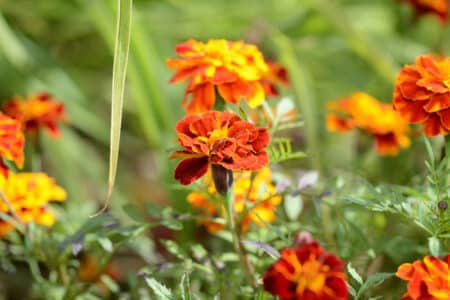
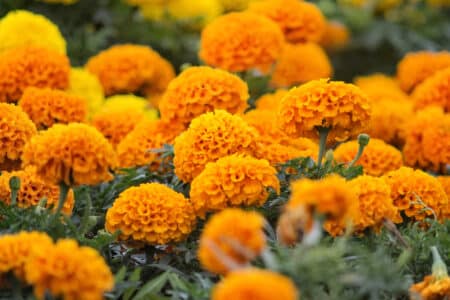
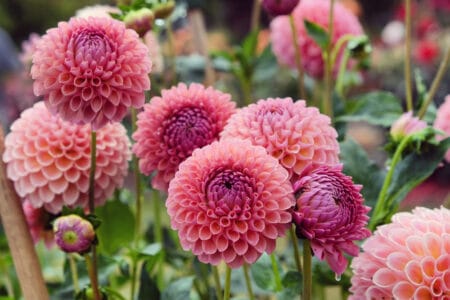
Marigolds are often recommended as companion plants in vegetable gardens because of their ability to attract pollinating insects like bees. In turn, neighboring plants support the marigold’s growth by way of enriching the soil or acting as a pest repellant.
Companion planting isn’t just about the mutual benefits of the plants; it also entails planting plants with similar care needs together to simplify care and maintenance.
Marigolds are drought-resistant plants that grow well in hot, sunny conditions. It doesn’t matter much the type of soil they’re in as long as it’s well-drained.
The seven companion plants we’ve identified below make good companion plants for marigolds because they share the same environmental preferences or support marigolds’ growth and development when planted nearby.
1. Bachelor’s Button
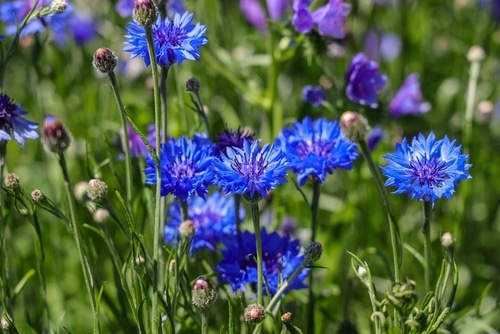
Bachelor’s button, also known as cornflower, is a self-seeding annual plant with blue flowers. Like marigolds, it thrives in full sun and well-drained soil.
On average, bachelor’s button plants grow 1 – 3 feet tall, making them suitable for planting next to tall or dwarf marigolds.
2. Cilantro
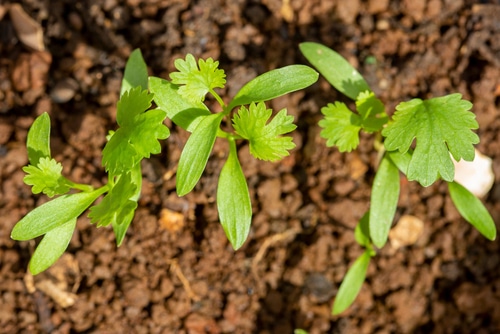
Cilantro is a great companion plant as well. It has small white flowers that attract wasps and ladybugs, both of which feed on aphids. Aphids feed on and can destroy marigolds.
Cilantro provides a nice color contrast when planted beside marigolds’ bright blooms.
If your main goal in planting cilantro is for natural pest control or to attract helpful insects, choose a type that won’t bolt.
3. Alyssum
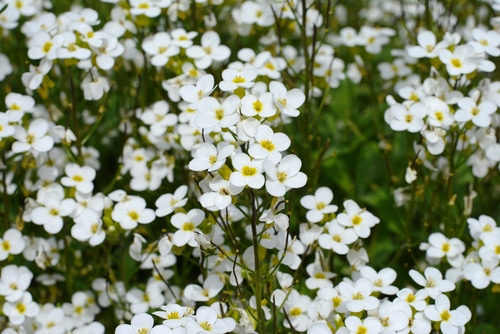
Alyssum is an annual blooming plant that doubles as a living mulch and ground cover to prevent moisture loss from the soil.
It’s a heat-tolerant plant like the marigold, and its dense foliage creates a beautiful backdrop against the marigold plant’s vivid yellows and oranges.
Alyssum also attracts predatory wasps that attack common marigold pests.
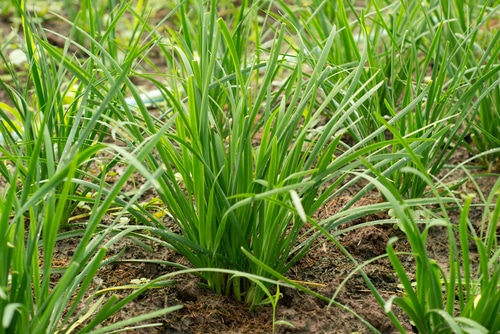
4. Garlic Chive
Garlic chives are perennials that thrive in full sun and heat like marigolds. Their white or purple blossoms also complement the marigolds’ bright yellow and orange-colored flowers.
They can grow up to 18 inches tall and look best either in front of taller marigold plants or behind dwarf varieties.
Garlic chives may also help lower the number of spider mites in the garden space.
5. Rosemary
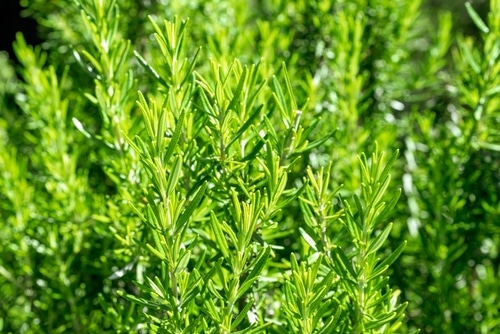
Marigolds and rosemary make perfect companion plants, especially if the green peach aphid is a problem in your garden. When planted together, these two plants lower the number of green peach aphids.
Rosemary, a perennial plant, can grow up to 4 feet tall and be planted side-by-side or as a background plant to marigolds in mixed garden beds.
6. Cosmos
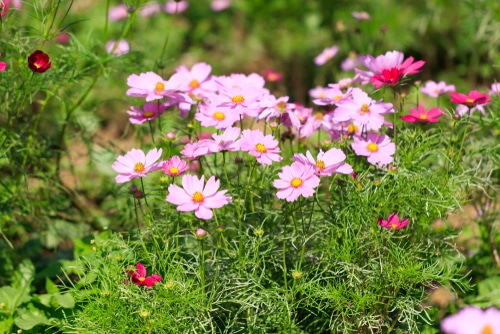
Cosmos and marigolds complement each other aesthetically; cosmo plants have flat, open flowers, which are the perfect contrast to marigolds’ spherical blooms.
Their thin, thread-like leaves also contrast with the marigolds’ course foliage. Cosmo plants attract beneficial pollinating insects to the garden in addition to adding depth and color.
7. Cleome
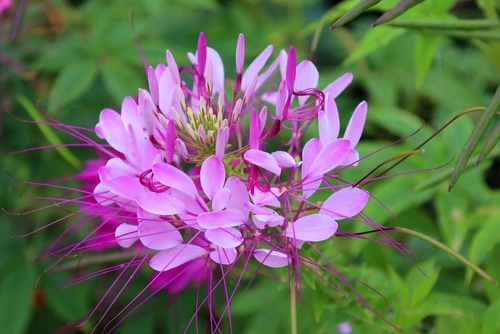
The cleome plant is often overlooked as a companion plant, but it’s one of the best for marigolds. It’s a haven for the Nesidiocoris tenuis bug, which feeds on spider mites. And spider mites are notorious for feeding on marigolds and other plants.
Plant cleome and marigold plants together for the benefits of natural spider mite prevention as well as adding color to your garden.