Choosing Wisconsin’s finest flowers requires knowledge about the state’s hardiness zone for insight into whether the plant will thrive when planted.
Most of Wisconsin falls in hardiness zones 3 – 5; it’s a region that has snowy, brutally cold winters and scorching summers.
Knowing which flowering plants to choose can be challenging, given Wisconsin’s unique climate. To help you decide, I’ve selected 7 flowers that grow well in Wisconsin along with recommended planting tips to maximize their growth potential.
1. Petunias
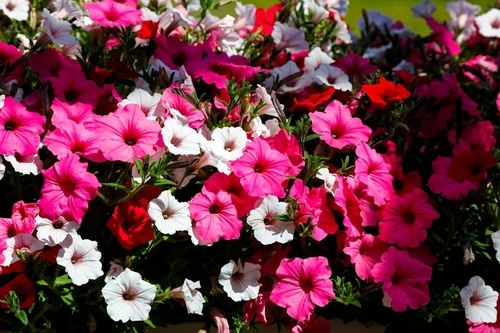
Petunias are one of the most common garden flowers for planting along landscaping borders and in flowerpots. They have bold-colored, trumpet-shaped flowers that begin to bloom in the spring and continue into the fall.
Most petunias enjoy full sun. However, in the summertime, ensuring they receive some shade will help keep them cool and produce better blossoms. Plant petunias in light, healthy soil with adequate drainage.
Keep petunias safe from damaging weather conditions by moving potted petunias to a covered patio or porch. You can also erect a temporary shelter or tent over garden beds to protect them from damaging weather conditions.
Petunias can provide long-lasting color in your summer landscape and can light up gloomy borders with color.
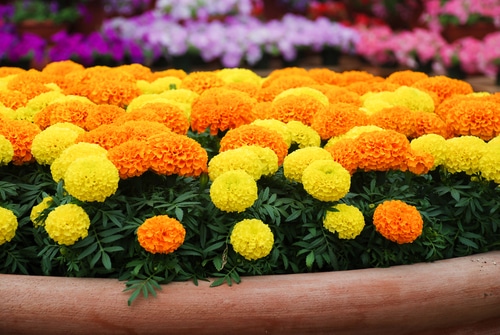
2. Marigolds
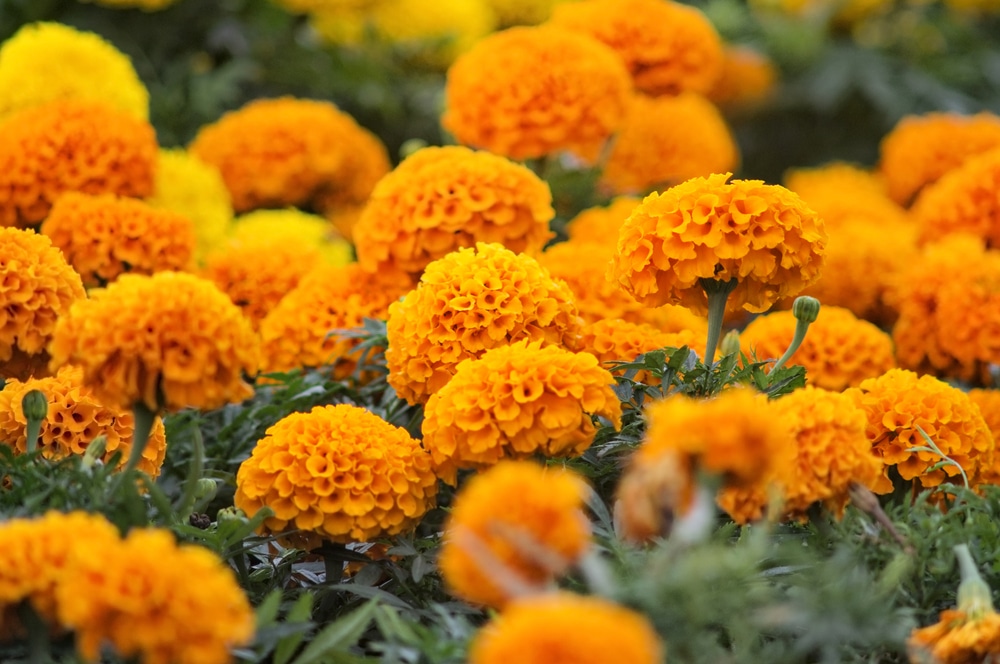
Marigolds are one of the most widespread and resilient bedding flowers; they flourish in most hardiness zones. Marigolds are annual plants that bloom in orange and yellow, with some having red, gold, copper, or brass accents.
Marigolds bloom continuously all summer long and will usually continue to bloom until the first freeze. Keep your marigolds deadheaded to encourage continuous blooming.
Plant your marigolds in full sun for the best blooms and healthiest plants. As long as the soil is not too acidic, they will grow well in any garden soil – simply add a little water when the soil gets dry.
Because they are heat tolerant, marigolds are good for planting along landscaping borders and in flowerbeds for a vibrant splash of color all summer long. These flowers help repel mosquitoes, so plant them in pots and place them on patios, porches, or in other sitting areas.
3. Goldenrod
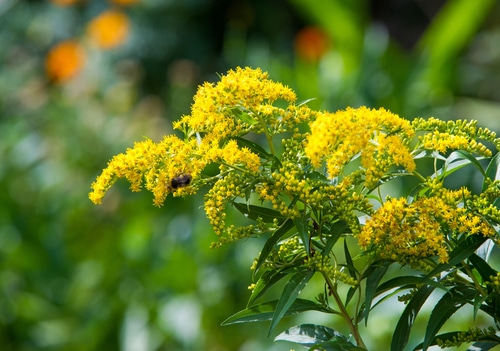
The tall, slender goldenrod plant has fluffy spike-like flowers that bloom in various shades of yellow. It actively blooms from late summer until autumn.
Goldenrods need full sun to maximize their blooms. Planting it in shade will result in fewer flowers. Goldenrod doesn’t have specific soil requirements, but it should be planted in well-drained, acidic or neutral soil.
Goldenrods don’t require much water once they’re fully established. Even then, only water during drought periods.
Goldenrods attract pollinating insects like bees and monarch butterflies.
4. Blazing Star
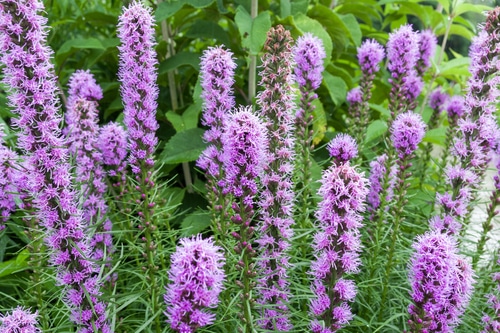
Blazing star is a long-blooming perennial. It has very distinctive flower heads with small star-shaped flowers that grow around a tall, bottlebrush-like spire. Its leaves grow in a cluster at the plant’s base.
Flood these plants with light and plant them in neutral to slightly acidic, well-draining soil. Blazing star plants are hardy in the summer heat and humidity and also do well in extreme winter weather as long as the soil is not too moist.
Blazing star plant is a favorite among florists; it adds beauty to flowerpots, gardens, and flowerbeds. Its flower spikes, which can grow as tall as 1 – 5 feet high, attract bees, butterflies, and hummingbirds.
5. Coneflowers
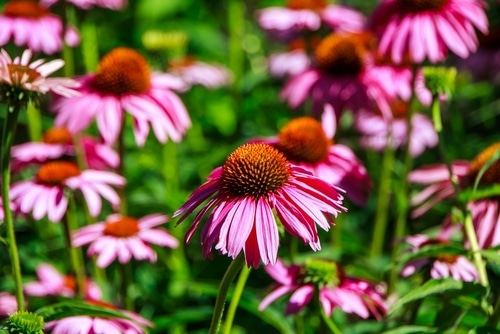
Coneflowers are fast-growing, hardy perennials that can reach 2 – 4 feet in height. They actively bloom from midsummer until the first freeze. They’re also self-sowing plants.
Coneflowers prefer full sun and well-draining soil. They tolerate poor soil but bloom best when planted in nutrient-rich soil.
Coneflowers are also drought tolerant once fully established; new plants need water occasionally, but water more during dry spells.
Coneflowers will attract birds, bees, and butterflies to your garden. While these flowers will definitely add a pop of color to your garden, they also make great cut flowers that you can snip and display inside your home.
6. Prairie Smoke
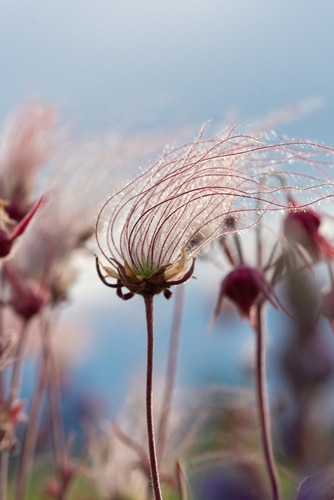
Prairie smoke plants add a unique touch to gardens from early spring to late autumn. Its long, feather-like seed heads create the illusion of smoke, hence its name. Prairie smoke actively grows rose-colored flowers during the summer that remain on the plant for several weeks.
This flowering plant grows best when it gets at least 6 hours of direct sunshine on most days. It’s accustomed to growing in sandy and gravelly soil, but it also thrives in well-draining loamy, clay soil.
Prairie Smoke is a versatile plant that looks great in gardens and grassy or meadow-like settings. It can also be used as a groundcover in gardens or planted with other plants with a similar growth rate.
7. Compass Plant
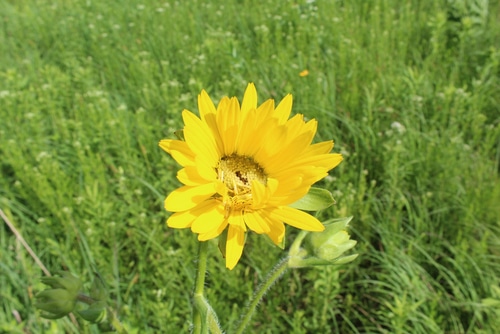
The tall, hardy, and low-maintenance compass plant is a perennial plant. Its stem is covered in coarse hairs, and the plant develops clusters of eye-catching yellow blooms. Its leaves often face north and south, hence the plant’s name.
Compass plants can grow well over 10 feet tall, so you’ll need to choose a location where the soil is deep and there’s lots of room to grow upward. For maximum growth potential, choose wet to semi-dry, loamy, well-drained soil.
They also need to be planted in a bright area that gets direct sunlight. Avoid planting them in front of other smaller flowers since they can grow tall and block them.