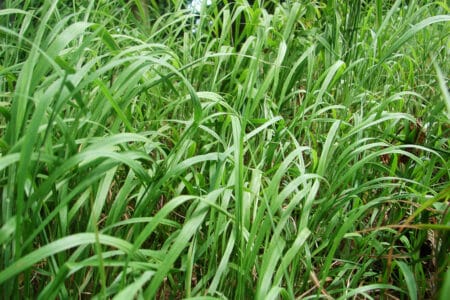
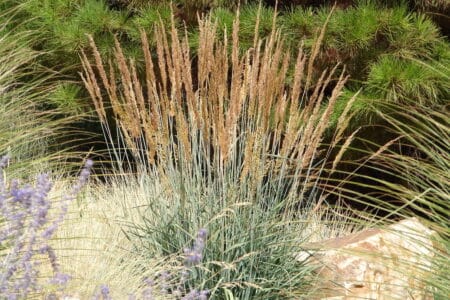
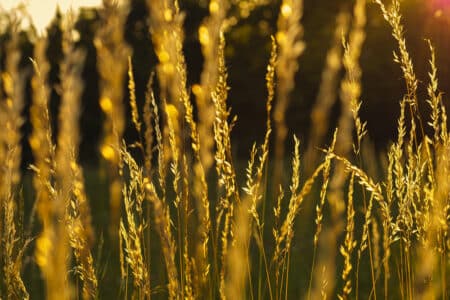
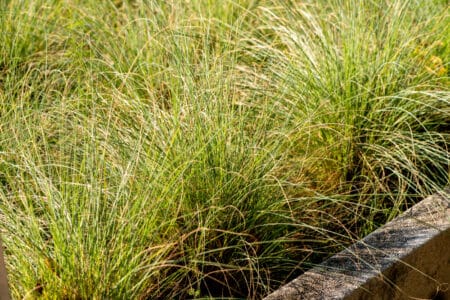
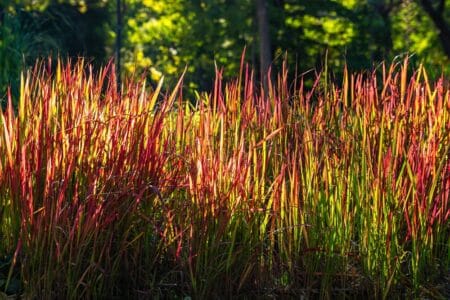
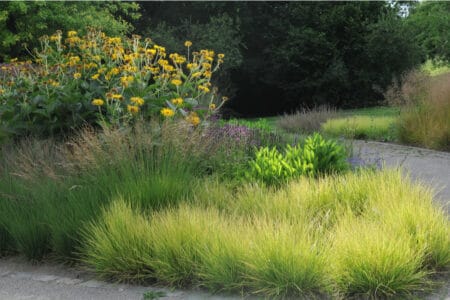
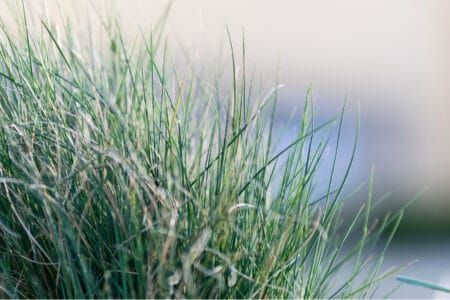
Schizachyrium scoparium, popularly known as little bluestem, is a grass with reddish-tan or copper-orange foliage. This grass is native to prairie lands but can be included in landscaping.
In this article, we’ll introduce you to little bluestem and how to care for it in your home garden.
General Information
Little bluestem is a fast-growing grass plant that grows 2 to 4 feet tall and can grow 18 to 24 inches wide. This plant can go unnoticed until it develops its silvery reddish-brown tone. It grows along ridges and on the hilltops of much of North America except in Nevada and Washington. Little bluestem grass is drought-tolerant and is often one of the grasses cattle and horses graze upon while out to pasture.
Other animals use this grass as well. Prairie chickens depend on the seeds to eat during the winter, and meadowlarks use little bluestem to create their nests. The base of this grass plant is also a prime location for dusky skipper caterpillars to build cocoons where they transform into butterflies.

Care and Maintenance
If you plan on incorporating little bluestem in your garden or landscaping, prepare the seedbed ahead of time with tillage and herbicides. This will help keep the seedbed clean and free of weeds. It may also be a good idea to conduct a soil study to evaluate how much fertilizer should be applied, if any. Also, ensure the ground or soil is moist before planting. Although little bluestem can withstand clay, gravel, sand, drought, heat, humidity, and mild salt, the grass can wilt if it’s overwatered or placed in soil that doesn’t drain well.
Little bluestem should be planted in the spring using a drill or spread seeder at a rate of 3.4 to 4.5 pounds of pure live seed per acre. The seeds should be planted 14 to 18 inches in the soil.
While dormant, little bluestem grass tolerates glyphosate and other herbicides targeted for grasses. Mowing can help with weed management, particularly within the first year.
How to Use Little Bluestem in Landscapes
Little bluestem is becoming increasingly popular in residential landscaping, largely because it is a beautiful and low-maintenance plant. This prairie grass performs very well in large plantings and should be planted in direct sunlight. Little bluestem looks great in flowerbeds and landscape borders, where it will readily blend in with other plants, rock gardens, or decorative garden features. This grass is also excellent for preventing erosion on garden bank slopes.

Companion Plants
Little bluestem looks great in a garden when it’s planted alongside these plants, which typically grow alongside it in its natural habitat:
Leadplant
Amorpha canescens, or leadplant, is a rounded deciduous shrub with tiny bluish-purple flowers that grow from grayish-green stems. They bloom for three weeks in late spring, attracting bees, butterflies, moths, and other insects that help with pollination. Leadplant can grow to be 2 to 3 feet tall. This plant goes dormant in the winter but resprouts in the spring. Their thick roots can grow up to 15 feet underground, making them resilient against drought and fire. Plant leadplant in full sun in dry to medium moist, well-drained soil.

Silky Aster
Silky aster, or western silver aster, is a perennial herbaceous plant that grows to be 12 to 24 inches tall. Peak growing season is from late summer to early autumn, during which time it produces 10 to 22 lavender daisy-like flowers that sit atop gray-green stems that are coated with silvery-white silky hairs. This plant thrives in full sun or part shade in acidic, dry to medium moisture, well-drained soil to avoid wilting. Keep in mind that silky aster is susceptible to powdery mildew.
Purple Prairie Clover
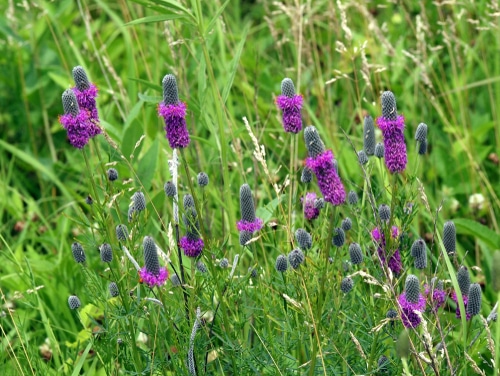
Purple prairie clover is identifiable by its cone-like flower head. This prairie plant is easily grown in any sunny location and in average to dry soil. It’s heat and drought-resistant and harbors beneficial bacteria called rhizobia by capturing nitrogen from the air. In turn, the plant acts as a natural soil fertilizer when its leftover plant material is left to enrich the soil. Once you plant a purple prairie clover, it’s best to leave it alone and not try to move it — root division can be tricky once they become established. Purple prairie clover is great for attracting butterflies, bees, and other pollinating insects.
Yellow Coneflower
Yellow coneflower grows wild in grasslands and savannas throughout the Midwest. It’s a tall, thin plant with rough leaves and delicate yellow flowers. Yellow coneflowers are resilient plants that don’t need a lot of care. For best results, plant them in a sunny location in alkaline soil. They are drought-resistant, so frequent watering isn’t necessary. These plants are also heat-resistant and naturally repel deer and other wildlife.