Pink muhly grass is a show-stopping source of color late in the year.
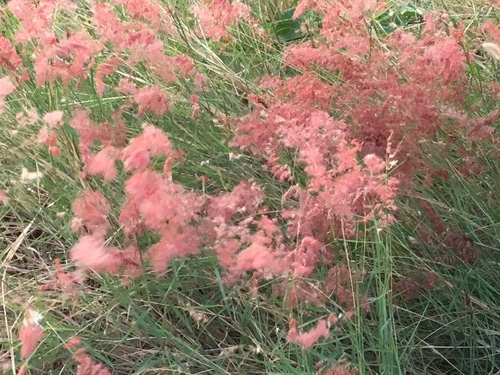
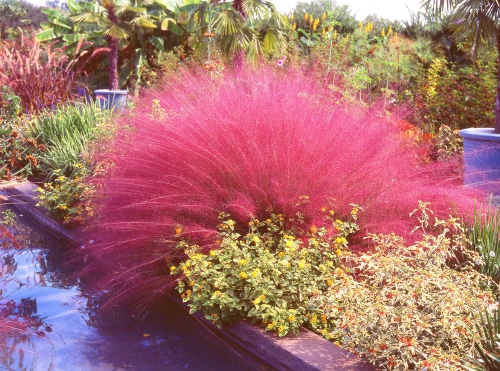
The huge, airy, open inflorescences, half as long as the whole plant, look like cotton candy and float gently above the dark green, basal foliage of finely textured leaves. Pairing it with other plants can provide a striking impact that can take your breath away.
I’ll talk about muhlenbergia capillaris in this post and how you may use it to add a wow factor to your garden.

General Information
Pink muhly grass, officially known as muhlenbergia capillaris, is a perennial ornamental grass native to North America that is prized for both its amazing drought resistance and the pink hue of its inflorescences.
The pink plumes belie the plant’s toughness. This grass prefers dry, rocky soil and is endemic to Florida and other southern US states. It may not be the best grass for enduring a harsh winter, but because of its extraordinary hardiness in extreme heat, it is the preferred grass for anybody who lives in a place where the transition from late autumn to early spring is less extreme.
Although it is native to southern states, it is not limited to growing in hot climates. It can be spotted as far north as New Jersey. This is one of the most adaptable and hardy new plants you can introduce to your landscape, provided a short list of certain requirements are satisfied.

Care and Maintenance
There are many different kinds of decorative grass, but few are as beautiful and hassle-free as pink muhly grass. It seldom needs any attention other than sporadic trimming and splitting of the plants every few years.
This trouble-free perennial is resistant to diseases and pests. Make sure to provide enough space between plants—at least a few feet—to allow for enough ventilation and prevent tar spot fungal infestation.
The main considerations for successfully growing pink muhly grass are listed below:
Sunlight Exposure
Pink muhly grass should only be grown in settings that get either partial or full sunlight. The grass can take some shade, but to develop properly and blossom beautifully, it must be exposed to at least several hours of sunshine every day.

Watering Frequency
Pink muhly grass does not need much in the way of regular watering after it has been established. It is considered drought-resistant and likes dry soil as its growing medium.
If there is a dry spell, with little rain available, there is no need to rush for a watering can. This grass has deep roots, which allow it to flourish even in situations of high dryness and temperature.
Soil Requirement
This plant likes slightly acidic to neutral soil. Plants will suffer harm from soil with an excessive pH level.
Pink muhly grass can easily tolerate salinity. Therefore, growing this kind of grass is often not hampered by soil that has a higher than normal salt concentration as a result of irrigation, mineral weatherization, or road salt.
Temperature and Humidity
This plant grows best in USDA Hardiness Zone 6, which means it cannot survive temperatures that go below minus 10 degrees Fahrenheit.
If grown outside of its native hardiness zone, it has to be planted in a protected location to shield it from cold winter temperatures. Although this plant doesn’t mind the heat, excessive humidity may have a negative effect on it and make it more vulnerable to tar spot fungus.
Fertilizer
The majority of ornamental grasses flourish without fertilizer. On the contrary, pink muhly grass may suffer if it receives too much nitrogen. If that happens, its shoots grow limp. If you are not sure if the soil in your garden needs additional nutrients, do a soil test to find out.
How to Use It in Landscapes
Pink muhly grass works well in landscaping beds filled with summer annuals. Because of its little flower panicles’ delicate pink plumes, it is often used to beautify parks, residential areas, and highway medians.
When utilized in a mass planting, which sets off the late-season splashes of pink particularly well, this perennial truly puts on a show—whether by itself or combined with other plants. Here are some ideas for what to plant in combination with muhlenbergia capillaris.
Companion Plants
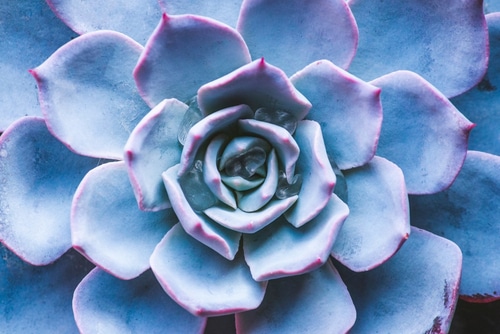
1. Echeveria ‘Afterglow’
One of the greatest plants to grow with pink muhly grass is the succulent echeveria ‘afterglow.’ It offers a beautiful accent for containers or low-water settings. Large rosettes of leaves with a powdered lavender-pink tint almost shine in the garden. Orange-red blooms can appear as a terminal flower stalk or hidden behind lower foliage.
Once established, this plant tolerates drought and grows well in the heat. This succulent is frost-tender. It thrives on sandy, dry to medium moisture, well-drained soils with some shade or sun.
This plant is a wonderful addition to Mediterranean, succulent, or rock gardens.
2. Octopus Agave ‘Agave Vilmoriniana’
Because of the way its long, slender, grayish-green leaves arch to resemble octopus tentacles, most homeowners refer to the plant as octopus agave. The ‘vilmoriniana’ cultivar has unusual-looking rosettes that may reach a height of 3 to 4 feet and a width of 5 to 6 feet.
These monocarpic plants only produce one magnificent bloom spike. A mature plant (one that is 10 years old or older) will produce an inflorescence, which is a 10- to 20-foot-tall stem covered with beautiful, fragrant, stunning golden-yellow flowers that are very alluring to hummingbirds.
The “Octopus” prefers a full-sun setting on a well-draining, sandy or gravelly soil. It is winter hardy in Hardiness Zones 9 to 11. While the plant is young, give it plenty of water. Once established, it is drought-tolerant.
This plant works well in Mediterranean gardens, rock gardens, succulent gardens, and beds and borders. It can also be an accent or container plant.
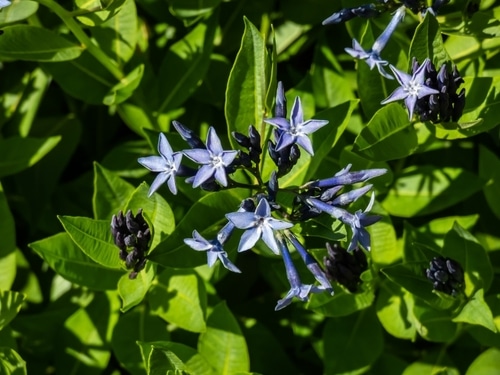
3. Narrowleaf Bluestar ‘Amsonia Hubrichtii’
The delicate blue, star-shaped blooms of the amsonia are what gave rise to the plant’s popular name, “blue star.” The color is one of the purest blues you can find in nature. Although the blooms are tiny on their own, they bloom in fluffy clusters and put on a lovely display in the spring. In the fall, the foliage turns a magnificent golden color, which adds additional interest.
Although neutral soil pH is ideal for growing the narrowleaf bluestar, it can grow almost anywhere, even in subpar soil. Although the plant dislikes prolonged dryness, bluestar plants may tolerate short droughts after they have established themselves. A full-sun location will result in more blossoms, but the plants can also thrive in partial shade, particularly in hot, dry conditions.
The narrowleaf bluestar is a great addition to beds and borders, rock gardens, succulent gardens, or Mediterranean gardens. Its airy but robust foliage is a great foil for virtually any other plant.
4. Mexican Bush Sage ‘Salvia Leucantha’
Mexican bush sage is typically planted solely for ornamental purposes. Its flowers are about 10 inches long and extend above its soft green foliage, which has a slight silvery tint. The leaves have a velvet-like texture and are grown in pairs on square stems.
This sage variety is a low-maintenance plant that requires only routine care to thrive in any home garden. You’ll want to pick a sunny location and plant it in the early spring. The soil should be fertile and well-drained, and a 1-inch layer of manure can be added to the soil to maximize growth.