Some of the greatest flowers can be cultivated in New York; the key is knowing which flourish in that unique environment. Here are 7 floral plants that can thrive in New York!
1. Daisies
Daisies are resilient and simple to cultivate. Daisies are perennials, so they will grow again the year after they’re planted. They also tend to spread, but not in an invasive way. They are easy to pull and relocate should they spread to an unwanted location within the garden.
Daisies are hardy—they can survive extreme temperatures. Although they like sunlight, you may be able to grow them in more shaded areas as well.
Daisies are a popular option for gardening because they are low maintenance and their blooms are easily recognizable and bright. They are a staple of traditional permanent borders and cottage gardens. They also make great additions as cut flowers and vase fillers!

2. Dahlias
Dahlias are another blooming plant you could think about planting if you live in New York. They produce colorful blooms in various sizes and look beautiful in flowerbeds, along landscaping borders, in gardens, and next to ponds or streams.
Dahlias will thrive when thoroughly mulched and clipped. It’s also important that the area where they’re planted remains weed-free. To stop weeds and retain moisture, use organic mulch around the plants.
Dahlias will grow rather well in any loamy and well-drained soil. Plant them in full sun.

3. Foxgloves
Foxgloves are eye-catching plants with their tall and slender tube-like flowers. They grow quickly, growing only a cluster of leaves at the base during the first year. Foxgloves usually don’t bloom until the second year.
When foxglove plants bloom, they grow 2 – 5 foot tall stalks that are covered with stunning funnel-shaped pink, white, or purple-speckled flowers.
Foxgloves are easy plants to grow in full sun to light shade. For optimal plant health and blooms, plant foxgloves in wet, rich well-draining soil that has a pH of 5.5 – 6.5.
To add the vertical beauty of foxglove blossoms to the flowerbed or yard, arrange them to grow behind other plants. You can reduce re-seeding by using them as cut flowers.

4. Clematis
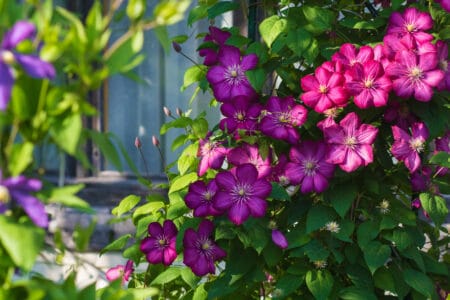
The clematis adds aesthetic value with its large dark violet cupped flowers. Its blooms normally have eight sepals that overlap one another, and each sepal has a trace of silver underneath.
Filtered sunshine is best to prevent fading the flowers’ vibrant color. Always keep the roots sheltered and plant them in well-drained composted soil.
This plant looks great when placed along walls, fences, and trellises. Its thick mat of leaves is perfect for providing porch shade.
5. Hollyhock Mallow
The low-maintenance perennial flower hollyhock mallow provides a burst of vibrant color to any landscape. This clump-forming shrub has palm-shaped leaves, and its round pink flowers bloom from early summer to late autumn.
Place hollyhock mallows in full sun and plant them in slightly rich, wet loamy, or sandy soil. Once established, they are drought resistant.

6. Tulips
Tulips are recognizable spring flowers that provide color to gardens. Their waxy leaves have a blue-green hue, and their cup-shaped blooms vary in shape; they can be ruffled, fringed, or have double blooms that resemble peonies rather than tulips.
Tulip plants grow best in full sun and in rich, well-draining soil that has a pH of 6.0 – 7.0 (neutral to slightly acidic). After planting tulip bulbs, give the soil a good quick soak in water. After that, reserve watering for prolonged dry periods.
Tulips are robust plants that come in a variety of hues. They are ideal for cutting and also make lovely borders and clusters in spring flower gardens.
7. Marigolds
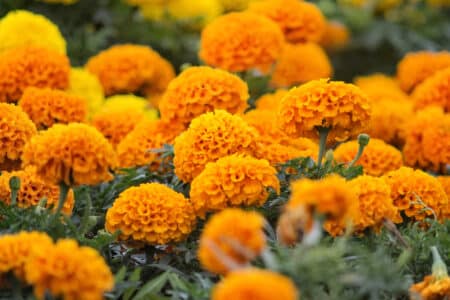
The marigold is also easy to grow in New York. The blooms of this cheery flower range from the small single-petal flowers of signet marigolds to the huge 4-inch double-petal blossoms of African marigolds.
Plant your marigolds in full light for the greatest blooms and healthiest plants. Marigolds are heat-tolerant plants that do well in extreme summer temperatures. Marigolds will also thrive in any garden soil if the soil is not too acidic.
Water your marigold seeds or plants frequently when you first plant them. Once they’re established, only add water during drought-like conditions.
Marigolds are ideal for growing in New York gardens. Most marigold varieties don’t grow very tall, so plant them in front of a landscaping border or in flowerpots so that their color is visible.