Many plant species thrive in New York’s climate. Despite the phragmites that grow along bottle-littered beaches, there are lots of edible plants that grow in New York.
It is important to know which plants are edible before consuming them. This article lists the names of seven edible plants along with key features that can help you identify them in the wild.
1. Purple Coneflower
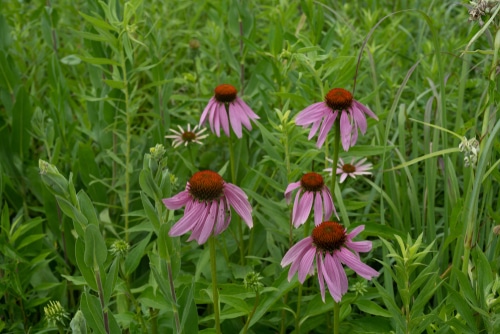
The purple coneflower is a herbaceous perennial plant that can be used in teas and medicines. The plant has deep purple or pink flowers that grow around a tall seed cone.
This edible plant has a strong, slightly bitter floral taste when used in herbal teas. To improve its flavor, add sugar, raw honey, agave, stevia, and/or milk.
Native Americans have utilized purple coneflower as a pain treatment for thousands of years. It can be used to cure headaches, sore throats, and stomach aches. It also has anti-inflammatory and anti-microbial properties that can help cure or prevent the common cold, flu, and ailments.
Purple coneflower grows around open wooded areas and savannas. It also thrives in moist grasslands, meadows, limestone glades, and along roads.
2. Jerusalem Artichoke
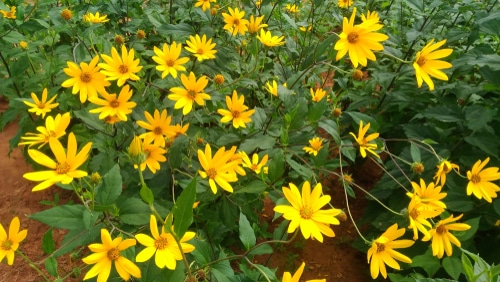
Jerusalem artichokes, or sunchokes, have little resemblance to artichokes and are members of the sunflower family. This perennial plant grows 2 – 8 feet tall, and its branches can be up to half its height. Its hairy stem can be light green or reddish-brown.
This edible plant tastes like a water chestnut and is commonly used in salads. It can also be boiled, mashed, roasted, or sautéed like a potato. If you overcook them, they quickly become mushy.
Jerusalem artichoke plants grow in the wet soil of grasslands and along rivers. You can also find them growing in prairies and along roads and railways, around wooded areas, and near drainage canals.
3. Bee Balm
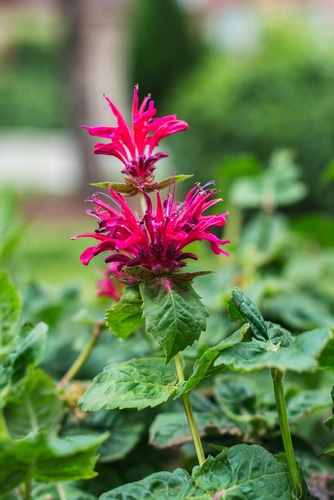
This plant’s red, pink, purple, and white daisy-like flowers attract bees, butterflies, and hummingbirds.
Bee balm is a member of the mint family and is frequently used to brew tea. Because of mint’s powerful antibacterial and antifungal properties, bee balm can be used for medicinal purposes. In fact, Native Americans used to boil the plant’s roots and foliage to make anti-parasitic tonics.
Bee balm grows in moist areas such as open forests, woodland borders, thickets, and floodplain meadows.
4. Queen Anne’s Lace
Queen Anne’s lace is an edible plant that grows to a height of over 3 feet. This common wildflower is easily identifiable by its flat-topped cluster of small, white flowers and fern-like foliage. When crushed, its leaves and stem smell like carrots.
This plant’s head of white flowers is delicious raw or lightly battered and fried. Its seeds can be used to flavor teas, soups, and stews.
If you catch these plants in their early stages, you can also use their roots and leaves as an aromatic to season soups and stews, and the leaves have a mild, carrot-like taste.
Queen Anne’s lace grows along roads and in undisturbed areas like open fields, meadows, and near forests.
5. Mugwort
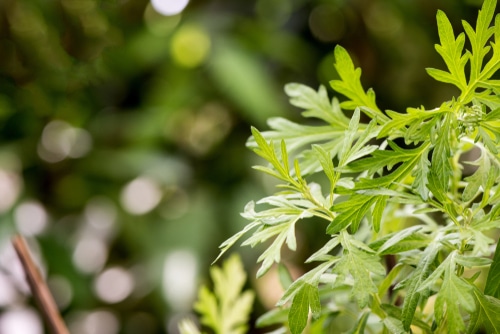
Mugwort is a perennial plant that is popular for its roots, which are often used to make medication. During the summer months, mugwort plants develop tiny red, pink, orange, and yellow flowers. Its foliage is green on top and white on the bottom, and it has purple stems.
Their roots, fresh shoots, and leaves are edible, although it has a slightly bitter taste. Mugwort roots can be dried, processed, and added to tea and the leaves and young shoots can be cooked.
There is no scientific evidence to support that mugwort has any health benefits or medicinal qualities.
Mugwort grows near railroads and around other undisturbed areas.
6. Garlic Mustard
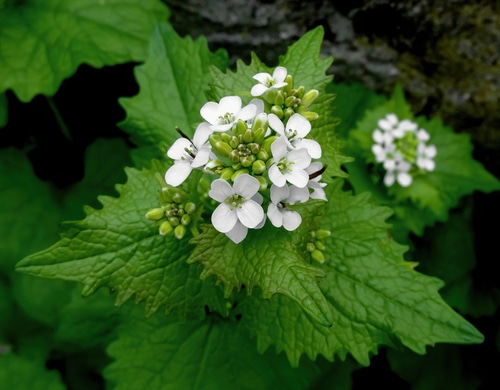
Garlic mustard is grown as a biennial or winter annual herb and is often found growing in New York City parks. This edible plant normally grows to be 2 – 6 feet tall. Its lower leaves are kidney-shaped and have scalloped borders and it has curvy “S” or “L” shaped roots.
Garlic mustard can add a garlic flavor to food. Its leaves and flower buds can have a bitter taste or taste like horseradish.
Garlic mustard plants are shade-tolerant and grow in forests, savannas, and other undisturbed areas.
7. Cattails
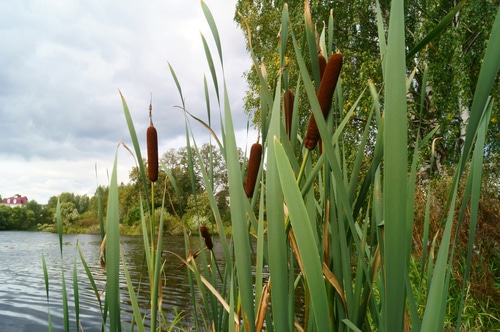
Cattail plants are perennials that have smooth, long leaves and a brown oblong flower head. The flower head reaches its green stage in late April and becomes coated with golden pollen.
Cattail pollen can be shaken into a bag and used as flour! It’s a delicious and healthy alternative to regular flour, and it works well in recipes for muffins, waffles, and pancakes.
Cattail is commonly found in freshwater; look for these plants in or near marshes or ponds, lakes, and riversides.