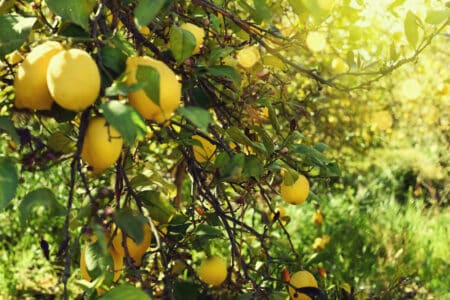
Orange trees (Citrus sinensis) are beautiful trees that are simple to grow in southern gardens. Citrus trees are great additions to any landscape. They offer shade and color to the yard, plus their evergreen foliage provides an elegant but striking appearance to the space.
Orange trees grow in USDA Growing Zones 8 to 10. However, miniature citrus trees can be cultivated in pots and kept indoors when weather conditions become unfavorable.
Before planting an orange tree, it is good to learn how to care for it through all its stages of life, especially as the tree begins to develop fruit.
Germination
Orange seeds can take up to eight weeks or more to germinate. The radicle emerges first, followed by the cotyledons or seed leaves.
Orange trees produce two types of seedling sprouts, genetic and vegetative. The vegetative sprouts are similar to the mother tree and will eventually produce high-quality fruit.
Cross-pollination has caused genetic differences in genetic sprouts, resulting in lower-quality fruit. Genetic ones are shorter and weaker than vegetative sprouts and are usually removed.
As the seedling grows and produces genuine leaves, it transforms into a little tree or sapling.

Juvenile
A young orange tree can reach 2 to 5 feet within a year, has thorns, and grows upright in its early stages. The young plant devotes all of its energy to vegetative growth. During this time, your tree develops more branches and takes on a more solid shape.
The juvenile stage lasts two to five years, depending on the type of orange tree and the growth conditions available.

Flowering
Orange trees are considered mature when they start to bloom. It can take anywhere from 7 to 15 years for orange seedlings to bloom for the first time. A healthy orange tree has a strong, grayish-brown trunk with a round canopy of long, oval serrated leaves.
The tree can reach a mature height of eight feet and be eight feet wide. The tree’s development slows down at this stage, and its efforts are focused chiefly on fructification and flowering rather than physical growth.
Beautiful, white, fragrant flowers bloom all year, though they are most abundant in late winter.
Most orange trees are self-fertile, so bees are not necessary for pollination or fruit set. However, pollinating insects like honeybees are drawn to the brilliant color and the tree’s appealing fragrance. If bees pollinate the flowers, fruit set and yield may increase significantly.

Fruiting
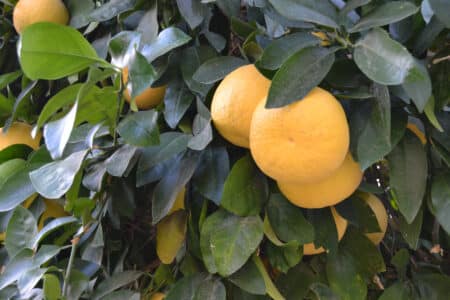
The successfully pollinated flowers on the tree will continue to develop and mature over the next seven to fifteen months as the fruit emerges from the flower’s ovary. During the cell expansion stage, the fruit rapidly expands in size
The fruit matures around a year later, and the orange tree might display flowers and fruits simultaneously. Ripe oranges typically have green or yellow-green skin, only turning orange when temperatures begin to drop.
Even though fruit output will eventually decline, the tree will continue to bear fruit for a few more years. If the tree is properly cared for, it can bloom and produce fruit for up to 30 years.