New Jersey’s mild climate is ideal for growing a variety of plants. Even in the winter, many different plants can be planted here.
Native plants existed in North America before the arrival of European settlers. These plants are considered native to the area because they have naturally adapted to grow there throughout time.
Choosing native plants for your garden or landscape benefits the local ecosystem and makes gardening easier.
1. Wood Anemone (Anemone quinquefolia)
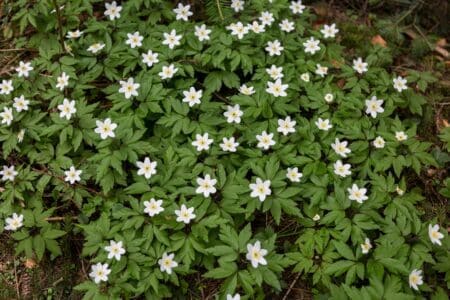
Wood anemone blooms from spring to summer. Rather than petals, its white flowers have extended sepals.
This early-blooming wildflower forms large clumps along woodland borders. Anemones have received the nickname wind flowers due to their thin stems that move with the wind.
The stems are typically straight and short, rising above whorled, dark green leaves. This plant can be a fantastic ground cover, especially during its peak blooming season.

2. Carolina Springbeauty (Claytonia caroliniana)
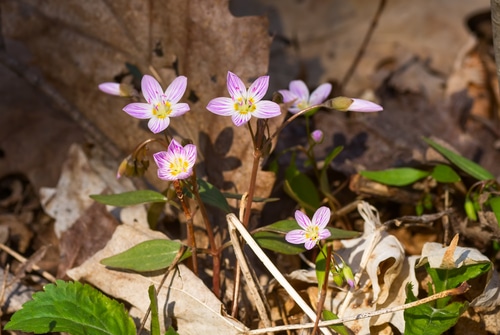
Carolina springbeauty is a native wildflower. It is a forest perennial that emerges from the ground in spring.
This small plant typically grows to a height of six inches or less. The leaves are one to three inches long, medium green, and about 3/4 inch wide.
Carolina Springbeauty blooms in the early spring. The flowers are tiny and delicate, measuring about half an inch wide and featuring five pink or white petals.
3. Showy Tick Trefoil (Desmodium canadense)
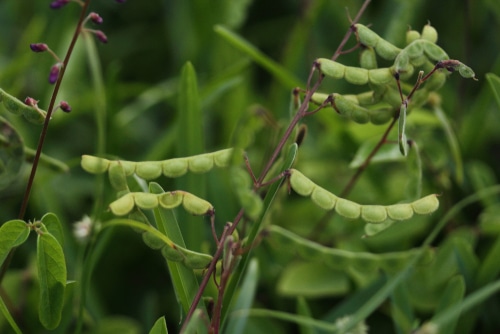
Showy tick trefoil is an upright perennial forb that can reach heights of 3 to 6 feet. It has branching leafy stalks near the flowers. At maturity, the stem is green with fine white hair and red vertical lines.
Desmodium canadense often gets covered with bright purple flowers during the blooming season. Because of its thick taproot, this plant is exceptionally drought-resistant.
Numerous insects, birds, and animals are drawn to this plant’s nectar, pollen, seeds, and leaves.
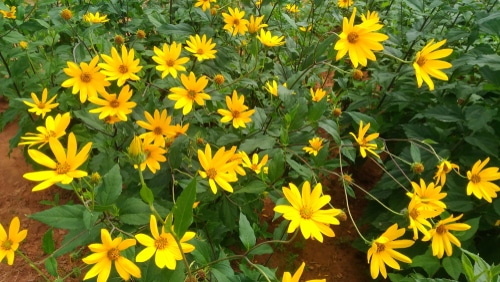
4. Jerusalem Artichoke (Helianthus tuberosus)
The Jerusalem artichoke, also known as the sunchoke or wild sunflower, is a perennial herbaceous root vegetable in the sunflower family.
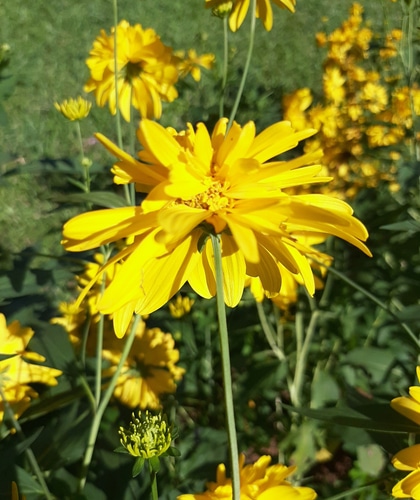
The Jerusalem artichoke has yellow flowers with thick leaves and hairy stalks. The large golden-yellow flower heads are carried on tall, rough, spreading stems.
Fresh Jerusalem artichoke tubers have a nutty flavor and a texture similar to water chestnuts. They are edible and can be eaten raw, boiled, mashed, or roasted in the same way as potatoes.
5. American Bellflower (Campanula americana)
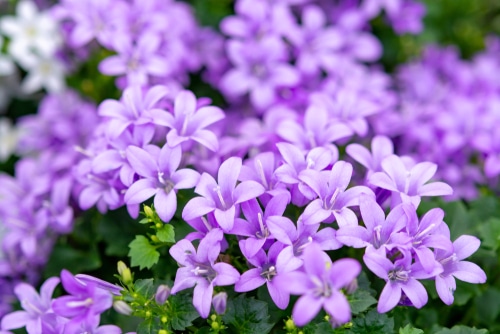
Campanula americana, also known as tall bellflower, is an upright annual or biennial native plant. It grows in moist open forests, damp meadows, streambanks, and shaded ditches.
Campanula flowers are typically bell-shaped. Numerous bee, wasp, butterfly, and hummingbird species will visit the American bellflower in search of nectar and pollen.
The plant can tolerate more sun in cooler summer temperatures but prefer afternoon shade as the temperature rises.
6. New Jersey Tea (Ceanothus americanus)
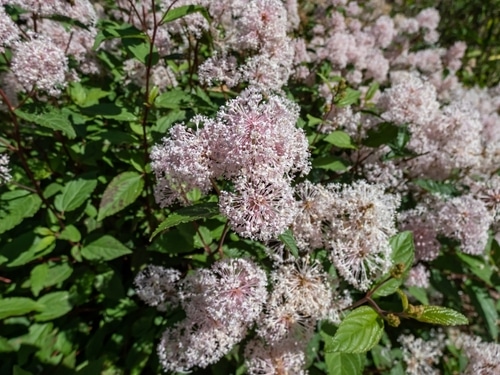
New Jersey tea is a deciduous shrub native to North America’s eastern and central regions. It grows slowly and forms a rounded crown. The plant reaches a height of 3 feet and a width of 5 feet.
In the early summer, it is covered in fragrant clusters of creamy flowers. Its blue-violet flowers add a splash of color to savannah or forest plantings in late summer.
Hummingbirds are drawn to New Jersey Tea because they consume the little insects pollinating the flowers. Its native habitat includes open deciduous forests, woodland borders, oak savannas, and meadows.
7. Maryland Golden-Aster (Chrysopsis mariana)
Maryland Golden-Aster is an upright perennial with dark green foliage. The plant can grow in most well-drained soils and under full or partial sun.
It maintains a vigorous low rosette until the end of the growing season before establishing vertical stems. From late summer through fall, the plants produce profusions of bright yellow daisy-like clusters.
The yellow flowers complement the blue Aster species in the fall bloom. This eye-catching combo draws attention and attracts a swarm of butterflies and other pollinators.