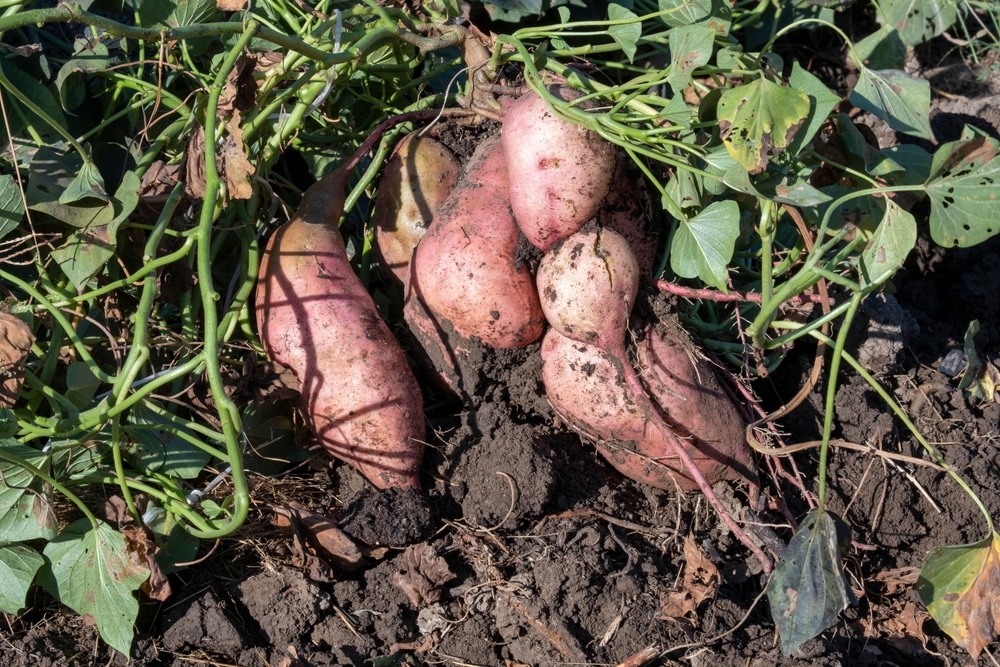
The tropical sweet potato is a member of the morning glory group and resembles the potato plant in appearance. But unlike the potato, the sweet potato is not part of the nightshade family.
Unlike most crops, sweet potatoes are produced from slips, which are developed from adult sweet potato plants. They are easy to grow and provide a bountiful harvest if handled correctly.
In this article, we’ll discuss how to take care of sweet potatoes to guarantee a healthy and plentiful yield from your backyard garden. Read on to discover more.
Why You Should Consider Growing It
Sweet potatoes are a staple of a healthy diet and provide much more nourishment than white potatoes. They are easy to process and cook with and can be added to anything from a bowl of soup to a bowl of brownie batter. Wherever a permaculture garden is located, sweet potatoes make excellent complements. And in many regions, they are easy to grow.
Here are five additional reasons for planting a crop of sweet potatoes.
1. Versatile plant
Sweet potatoes produce tasty tubers, which is the most apparent benefit of growing the vines. But they are not the only edible part of the plant.
In tropical regions, where many conventional greens struggle to survive the heat, the stems and leaves of the sweet potato vine are a valuable source of greens. You can also plant the vine as groundcover or feed your animals.
The plant can withstand both floods and droughts. Best of all, it is easy to grow. Simply plant a fresh slip in the ground, and in about three months, it will have multiplied into a plentiful crop.

2. Climate-friendly Plant
In warm conditions that enable year-round agriculture, sweet potatoes are a perennial crop; in colder regions, they may be very successful as an annual crop or garden ornament. The sweet potato vine requires a soil temperature between 60 and 85 degrees Fahrenheit, but it can withstand air temperatures as high as 100 degrees Fahrenheit.
3. Low-maintenance
Sweet potatoes are simple to cultivate. They thrive on sand and loose soil, but they can grow in dense clay. Rich soils are beneficial for sweet potatoes, although they may also grow well in less favorable conditions.
The vines prefer evenly moist soil, although they will tolerate drought conditions. Provide approximately 1 inch of water a week. If the plant does not receive enough water, it will become almost dormant and only resume growing once its supply of water has been restored.
4. Stores Well
Sweet potatoes are a staple of our diet that is easy to store. They may endure months without much alteration if properly cured, which takes a week or two in a warm, humid environment. Sweet potatoes are preserved by the curing process, which hides cuts and nicks.
5. Highly Nutritious
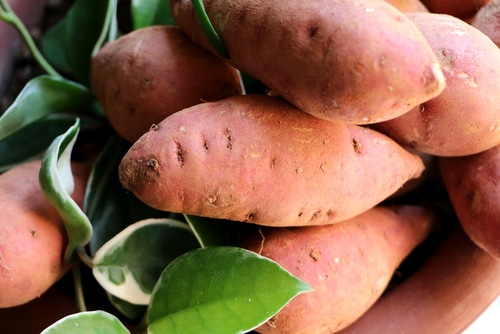
Sweet potatoes are colorful root vegetables that are high in nutrients.
They include plenty of antioxidants and fiber, which guard your body against the harm caused by free radicals and support a healthy stomach and brain. Additionally, they contain an abundance of beta-carotene, which is turned into vitamin A to promote healthy eyesight and the immune system.
Best Time to Plant
The sweet potato vine is native to tropical regions, so it is no surprise that they prefer to grow in warm soil.
You may begin taking slips from mature tubers up to 12 weeks before planting them outside. Once the last frost has passed and the soil has warmed up to at least 65 degrees Fahrenheit, wait another month and then plant the slips outside. Temperatures should not dip below 55 degrees Fahrenheit at night.
The challenge is to plant the slips early to give the vines enough time to grow tubers, but not too soon so that they are protected from a late-spring cold spell. If you are worried that cool nights are too much for the slips to survive, cover them with row covers or plastic milk bottles at night and remove them during the day.
Sweet potatoes are often planted in elevated rows that are approximately 8 inches above the ground. This helps the soil warm up and keeps it well-drained. If you are planting in a chilly region, covering the soil with black plastic can also bring up its temperature.

General Care
Sweet potatoes are simple to cultivate. A few plants may readily provide a sizable crop. If the soil is warm enough, the plants root anywhere they come into contact with the ground.
Slips are sprouts that grow from mature tubers. Most cultivars need between 90 and 120 days to mature. Check your frost dates and the length of your growing season. If you plan to purchase slips, give yourself and the slips enough time to grow.
It takes a little effort to get sweet potato slips ready for planting. It is best to let them root for a few weeks on a bed of moist peat moss.
Once you are ready to transplant the slips, make sure the soil is loose and well-drained. If there are any obstacles in the ground, the vine will not be able to produce big tubers.
In addition to loose soil, there are a few additional basic needs you need to provide to grow wonderful sweet potatoes.

Water Needs
Once you have placed every slip into the soil, water them. You must soak them thoroughly until the surrounding ground is saturated. Slips need daily watering for the first week.
After the first week, you can slowly decrease the amount of water you provide until you are watering once per week. You may need to adjust how often you water the slips, depending on whether the soil is very dry or if it has been particularly rainy. If you don’t water your sweet potatoes during the warmest parts of the summer, they won’t produce as much, even though they can tolerate drought.
Amount of Sun
Sweet potato vines are heat-loving, low-maintenance garden veggies. The plant cannot survive cold temperatures and thrives at temperatures of about 75 degrees Fahrenheit. It favors warm, sunny days. Ideally, sweet potatoes should get 8 to 10 hours of direct sunlight each day.
Place them in the most exposed, south-facing area of your garden, far away from any trees or buildings that might shadow the plants. They will have fewer leaves and tubers if not exposed to adequate sunshine.
If you live in an exceptionally dry or hot area, partial afternoon shade, however, might be tolerated by your sweet potatoes.
Fertilization
Sweet potatoes don’t need a lot of food, but it’s still vital to provide them with a balanced diet, usually by properly preparing the soil. Composting the grounds before sowing the sweet potatoes is the best strategy.
As an alternative, you could saturate the soil with an organic solvent fertilizer before planting. But keep in mind that overfeeding will lead to the development of leaves rather than tubers.
Other Maintenance
Aside from the general care requirements mentioned above, here is one more tip for growing sweet potatoes.
Overwintering
Cutting allows sweet potato vines to endure the winter in water and be prepared for planting in the spring. Digging out the sweet potato vine’s roots and storing them in peat or vermiculite in a cold, dry area is another method for wintering the plant. The growing tuber may be planted in the spring.