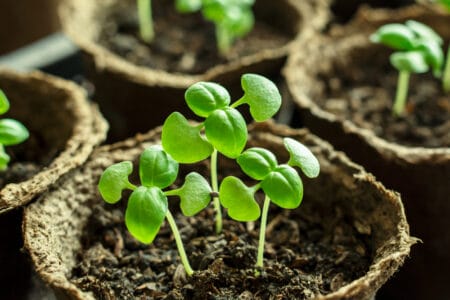
When grown from seed, a blueberry bush will start producing berries when it is about two years old but does not mature until it reaches around 7. Most likely, you purchased your bush as a 1 to 3-year-old plant. It may produce a small amount of fruit the first year after planting but will not mature for another 4 to 6 years.
Although this slow-growing plant takes its time, the wait will be worth it when you can finally pick a bountiful harvest from your backyard. Blueberries can be finicky to grow, but understanding their growing requirements will make it easier.
Why You Should Consider Growing It
Blueberries are also a good source of vitamin C and are high in fiber and antioxidants. They have anti-inflammatory properties and may help lower your cancer risk and heart disease.
Blueberry bushes can be grown in your yard as ornamental shrubs or in large pots to add color to your patio. They have pointed, rectangular leaves that are rough to the touch and turn a bright red in the fall.
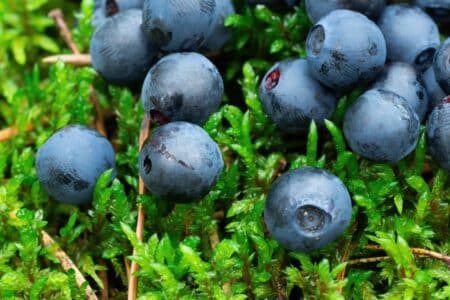
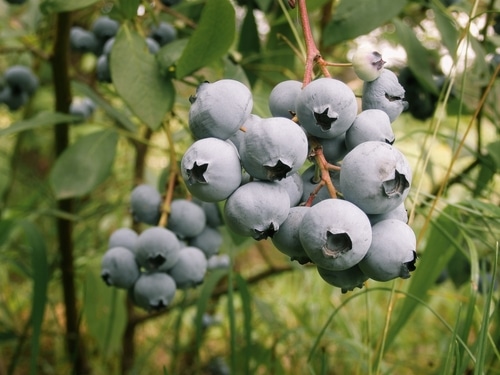
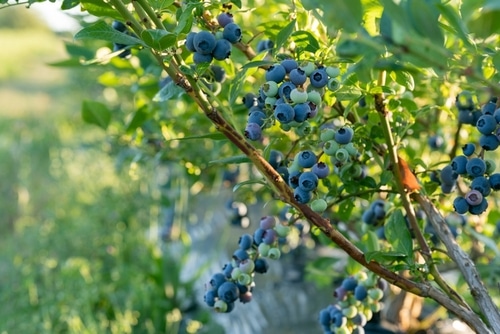
Because the plants are perennials, if properly cared for, they will continue to produce for years. The berries develop as tiny white bell-shaped flowers in late spring, then mature into green fruits that turn a deep purple-blue color. The fruits can be made into jams and jellies, baked into pies, bread, muffins, or frozen for later use.
When To Plant It
Early to mid-spring is the best time to plant blueberry bushes in Zones 5 and below. They can also be sown in late fall in USDA Hardiness Zones 6 and above. It is best to plant blueberry bushes in the spring or fall, but they can be planted any time of year as long as there is no risk of a deep freeze.
General Care
Water Needs
Due to their shallow roots, blueberries require at least two inches of water every week; this can be done by deep watering the plants at least once a week. Cultivating blueberries in an area where water is freely accessible to keep the roots moist during the growing season is best.
Amount of Sun
Blueberry bushes require full sun for optimal growth and fruiting. Plants tolerate partial shade, but heavy shade causes them to produce fewer flowers and less fruit. Avoid planting in areas with trees because they compete with other plants for water and nutrients and hinder airflow.
Fertilization
Ammonium sulfate is a typical fertilizer for blueberries. Any fertilizer for azalea and rhododendron plants can be used on blueberry bushes. Fertilizing should be done in early spring before the leaves fill out. Avoid fertilizing in the first year of blueberry growth, as the roots of newly established plants are salt-sensitive.
Other Maintenance
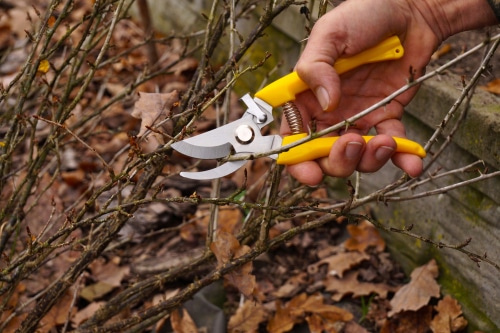
Maintenance pruning allows blueberries to develop healthier foliage and produce fruits to their full potential. However, they won’t need to be pruned until the fourth year. Prune in the mid to late winter when they’re dormant.
To encourage new development, trim around one-third of the plant. Pruning aims to open the bush to allow light to reach the center and prevent damage from the branches rubbing against each other. Begin by pruning any branches that cross another branch.
Pruning in later years should focus on removing the older branches. Older branches will appear gray, and newer branches tend to be reddish.