Ground cover plants are low-growing plants that form attractive mounds or carpets. They gradually cover the area, hiding bare land and improving the landscape’s appearance. Choosing ground cover plants suited to your climate can reduce the effort needed to maintain your landscape.
Plant enthusiasts who live in New York may find it rewarding to grow ground cover in their gardens. Some of these low-growing shrubs produce beautiful flowers and fruit.
1. Shrubby St. John’s Wort (Hypericum prolificum)
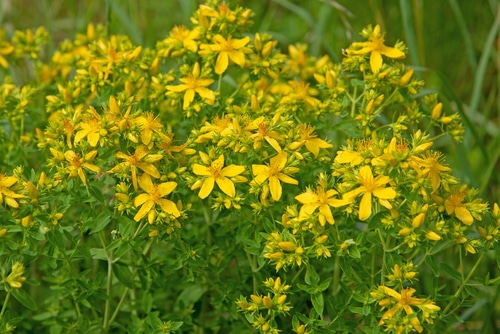
St. John’s wort is a compact shrub that requires little care. It is adaptable to a wide range of growth conditions, offers interest in every season, and has a long bloom cycle.
This shrub grows slowly, but the results are well worth the wait. During its peak bloom, it produces several stamens on its flowers that nearly cover the yellow petals.
St. John’s wort is tolerant of various moisture conditions, can withstand flooding, and has no significant disease or pest problems.
2. Ostrich Fern (Matteuccia struthiopteris)
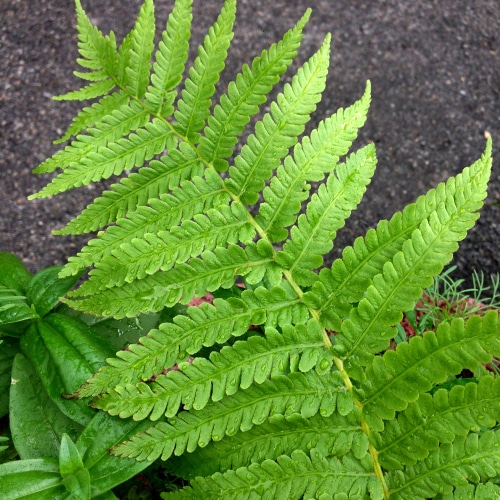
For colder climates, the ostrich fern is a natural, clumping, deciduous fern. Because it looks lovely in large groupings, the fern is a popular groundcover plant in gardens.
The finely dissected, shuttlecock-shaped medium green fronds stand out. These sterile fronds are large, arching, and resemble ostrich feathers.
This plant prefers cool surroundings but can tolerate the heat and humidity of summer. It grows best in wet areas near streams or ponds, natural gardens, or moist, shaded woodland settings.
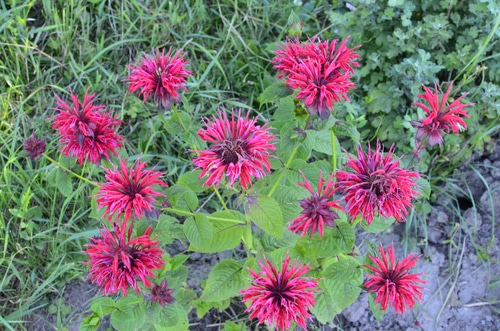
3. Scarlet Beebalm (Monarda didyma)
Monarda didyma is a hardy perennial with tall flower clusters. An attractive shrub, it is usually used as an ornamental plant because of its appealing, fragrant scent.
The tubular petals of the daisy-like flowers come in red, pink, purple, and white colors. These flowers are very enticing to many pollinators. Scarlet beebalm will tolerate shade in hot summer climates and blooms beautifully in any shaded area that could use a splash of color.
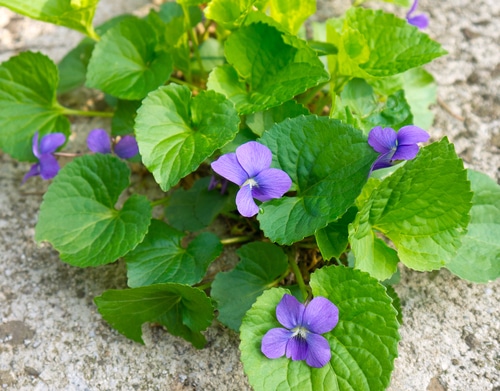
4. Common Blue Violet (Viola sororia)
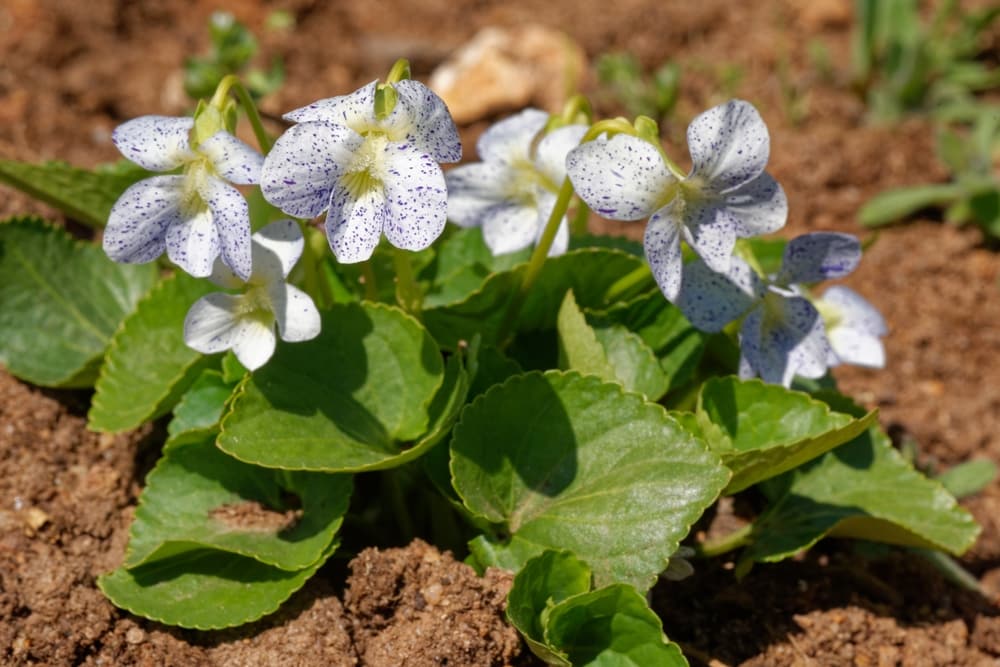
Viola sororia, common blue violet, is a perennial herbaceous plant in the Violaceae family. A short, rosette-forming wildflower with serrated heart-shaped leaves, blue-violet has small blue or white flowers that bloom from spring until early summer, brightening up gardens.
Despite their bland flavor, the flowers are edible. Because pruning can control its spread, this plant can be used as a groundcover along walls and path boundaries. It grows well in areas with partial shade and moist, well-drained soil.
5. Bearberry (Arctostaphylos Uva-Ursi)
Bearberry (Arctostaphylos uva-ursi) is a low-growing ground cover that grows to a height of 6 to 12 inches. The leaves on the flexible stems are dark green, leathery, and teardrop-shaped.
Bearberry grows to form a lovely, dense groundcover in settings where few other plants can thrive. It is ideal for rock gardens and looks beautiful trailing over garden walls.
Once established, bearberry is an extremely drought-tolerant plant. This low-growing, a low-maintenance perennial is popular with landscapers and homeowners.

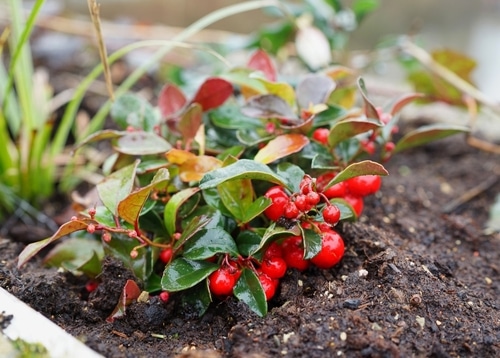
6. Eastern Teaberry (Gaultheria Procumbens L.)
The eastern teaberry, a member of the blueberry family, grows in the understory in damp clay and soil enriched with organic materials. However, it prefers moist, well-drained soil.
G. procumbens is a little evergreen shrub that grows to a height of 6 inches and spreads indefinitely. It has round, leathery leaves that are aromatic when crushed and turn reddish in the winter.
Following the scarlet berries are small, bell-shaped white or pinkish flowers. The shrub can withstand intense shade and is an excellent groundcover for shaded landscape areas.
7. Field Pussytoes (Antennaria Neglecta)
Antennaria neglecta captivates with its towering stalks of fluffy, white flowers that resemble cat paws. Its ground-hugging leaves provide adequate ground cover in dark, dry areas with poor soil.
Pussytoes is a charming little plant that is incredibly stunning when it blooms in clusters. Each flower cluster contains about 20 small, unscented flower heads.
American painted lady butterfly caterpillars nest on this plant and devour its leaves. Under optimal growing conditions, it can spread by runners, called stolen, and rapidly fill in barren areas.