Purple flowers are a popular addition to many gardens and can draw attention to your garden’s more elegant flower arrangements. Purple blooms can add a touch of grandeur and nobility to landscaping borders, planters, flowerbeds, and cut flower arrangements.
In this article, I will introduce you to 7 plants with violet flowers that can add charm and elegance to New York gardens.
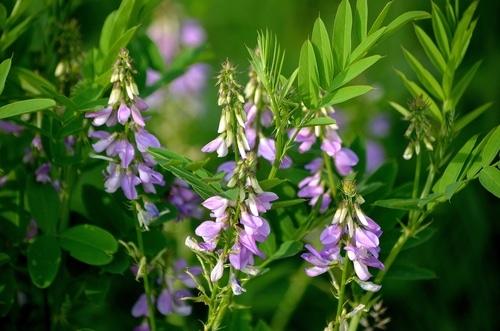
1. Old-Field Toadflax
Old-field toadflax can grow as an annual or a biennial plant. This plant has lovely flowers that bloom in shades of pale blue and blue-violet from March through July. Its leaves are quite large; they can be 1.5 inches long. Old-field toadflax is great for attracting pollinators like butterflies.
Plant old-field toadflax in areas of your garden that receive plenty of light. It’s also best to plant it in sandy or rocky soil.
2. Late Purple Aster
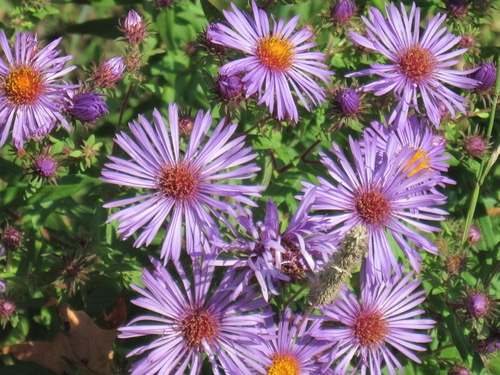
The late purple aster is a perennial herbaceous plant. This plant will be the star of any autumn garden thanks to its gorgeous blue-purple daisy-like blooms. The late purple aster blooms in August when many other summer flowers are dying. It can continue blooming through October.
Late purple asters tolerate arid conditions. Work 2 – 3 inches of compost into the soil in the area where the aster plants will be planted. This plant grows best in slightly dry to dry well-drained loamy soil. Avoid planting it in clay soil because it can cause root rot. Make sure it’s planted in full sun to maximize growth and bloom potential.
Depending on their height, late purple asters look great as border plants or in rock or wildflower gardens.
3. Rocky Mountain Bee Plant
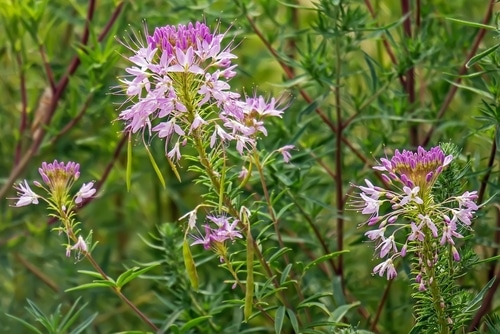
The Rocky Mountain bee plant is an annual plant that blooms in the summer. It has three-lobed leaves and clusters of spidery pinkish-purple flowers with long stamens. The plant itself can grow over 3 feet tall.
The Rocky Mountain bee plant grows best in well-drained light and sandy soil and when planted in full sunlight or partial shade.
When you add this exquisite and lovely plant to your landscape, prepare to be rewarded with an abundance of butterflies.
4. Petunias
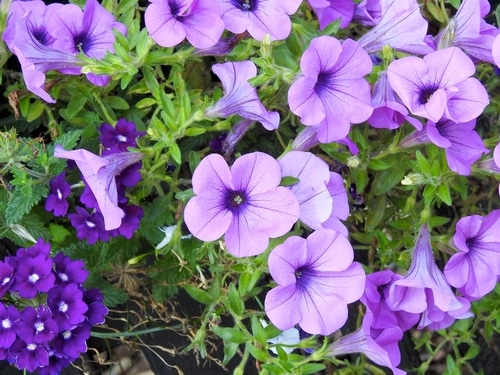
Petunias feature broad, trumpet-shaped blooms that can come in almost any color; however, blue-purple is most common. Petunias are wonderful annual flowers that can continue blooming until the beginning of November. In fact, the warmer the temperatures, the more petunias bloom.
Petunias require frequent watering and feeding. They grow best when planted in areas that get at least 6 hours of direct sunshine on most days. In addition, petunias thrive in loose, rich, well-drained soil.
Petunias can add purple to any part of your garden as well as to hanging baskets and window boxes.
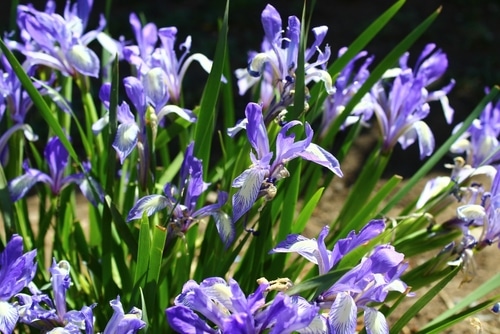
5. Northern Blue Flag
Northern blue flag plants can make striking additions to any garden. They grow in clumps and produce 3 – 5 flowers, each having a yellow center and purple veining. The blossoms can grow as large as 4 inches in diameter.
The northern blue flag plant thrives in full sun to light shade and it prefers damp environments. Choose this plant if you want to add flowers next to a small pond or marsh.
6. Great Blue Lobelia
This plant can grow 2 – 3 feet tall. It has lilac tube-shaped flowers that grow in clusters along the stem.
This plant grows best in medium to wet loamy soil. It should also be planted in full sun to partial shade. Be careful to shield great blue lobelia plants from intense heat and water them regularly to keep the soil moist.
The great blue lobelia is an excellent addition to flowerbeds, landscaping borders, and all types of gardens. It also does well when planted close to ponds and streams. These flowers also attract hummingbirds, butterflies, and other pollinating insects.
7. Dame’s Rocket
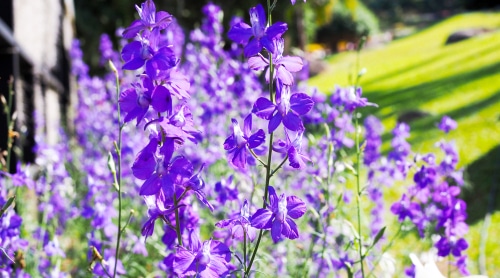
Dame’s rocket is a blooming biennial. It can grow as tall as 4 feet by its second year. It thrives in rich, wet, and well-drained soil. In addition, the soil’s pH should be neutral to slightly alkaline to ensure this plant’s robust growth.
Because they have such shallow roots, dame’s rocket plants are perfect for growing in patio planters. They also look excellent in gardens — just ensure that it gets plenty of water and nutrients.