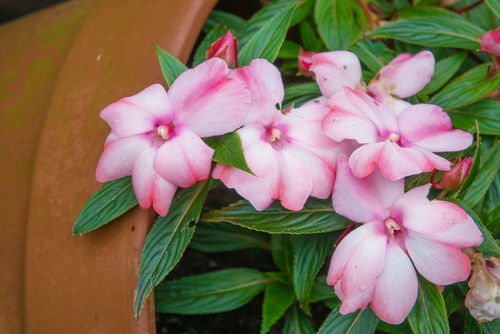
These remarkable, low-maintenance plants, known as SunPatiens® (Impatiens hawkeri hybrid), represent a breakthrough in flower breeding. SunPatiens are robust, heat-loving impatiens that thrive in full sun or part shade and provide continuous color from spring through frost.
This article will discuss Sunpatiens and the best ways to care for them so that they will flourish in your garden.
General information
One of the most well-liked types of annual flowers is impatiens. However, because common impatiens demand a shady spot, there are restrictions on where they can be planted. But SunPatiens, also known as Impatiens x hybrida SunPatiens®, are impatiens hybrids that can survive in direct sunlight.
The Japanese company, Sakata, developed Sunpatiens from impatiens from New Guinea and the wild. It released them onto the market in 2006. The blooming season for SunPatiens is exceptionally long, lasting from spring through fall and continuing until a hard frost. Compared to New Guinea impatiens, these plants are often larger, bushier, and produce a more significant number of blooms.
Additionally, these plants’ thick petals and leaves make them more resistant to disease and damage. Different size categories are available for Sunpatiens plants, including compact, spreading, and vigorous.
Plants that are either compact or spread out over time work wonderfully in containers. Compact plants stay small while the spreading ones fill out a hanging basket or pot. Vigorous plants are ideal for garden beds because they mature quickly and can efficiently cover an area in a vibrant color palette.
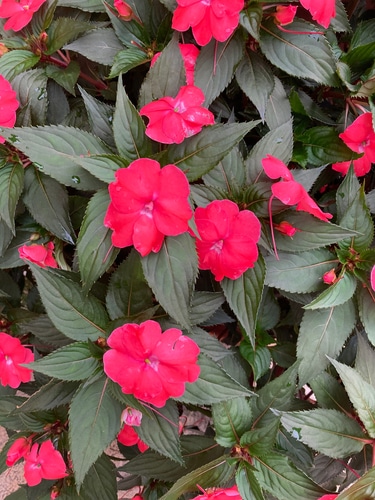
Care Guide
These stunning plants combine tremendous floral power with plants that thrive virtually anywhere. SunPatiens are low-maintenance plants that may be utilized in baskets, window boxes, patio pots, or in the landscape. One thing to remember when deciding where to plant them is that they do not thrive in compacted soil.
Below are some of the things you need to consider when growing Sunpatiens.
Amount of sun
SunPatiens will produce a significant number of blossoms when grown in full sunlight. Their bloom is unaffected by shade as long as they receive roughly four hours of direct sunlight daily; however, they do not grow well in complete shade and will not bloom.
Usage of Fertilizer
Sunpatien should be fertilized sparingly. If they get too much fertilizer, plants could produce fewer flowers and have leaf tip burn.
As a macroelement, magnesium is often undersupplied in commercial fertilizer blends.
Richer growth is encouraged by high phosphorus levels. Low phosphorus levels cause the bottom leaves to become reddish-purple in hue. For SunPatiens, a 10:5:1 potassium, calcium, and magnesium ratio is advised.
Watering Frequency
Water SunPatiens every day for the first two weeks after planting, or as much as is required to keep the soil moist.
Once they have developed robust root systems, water them when the soil feels dry; the frequency will depend on the climate. The soil dries out considerably more quickly on hot, windy days than on cloudy days.
Hanging baskets and other container plants require more frequent watering than garden plants, often twice daily.
Soil Requirement
Create the ideal circumstances for growth by selecting a soil high in organic matter and good air circulation. Raised beds and containers are beneficial in this regard.
Temperature and Humidity
The SunPatiens thrive in climates that are hot and humid. Although you can plant them in the spring when the soil is still cool, around 55°F, a Sunpatiens plant can only withstand temperatures as low as 32°F, and even then, only for a few hours. The cells of this plant contain a lot of water but have no mechanism to protect them against freezing temperatures. When temperatures rise, the parts of the plant that have been harmed by ice or frost will be replaced by new growth.