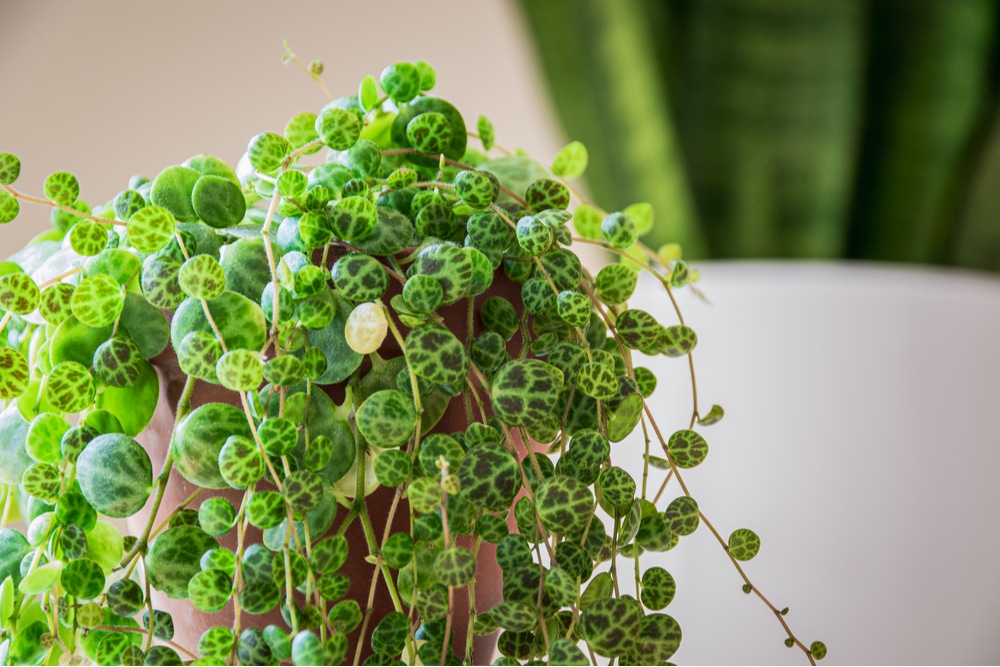
The string of turtles is a semi-succulent plant with leaves resembling adorable little turtle shells. Also known as a radiator plant or magic marmer, the trailing vines on Peperomia prostrata are covered with tiny leaves displaying multi-colored patterns in shades of green, yellow, and even white. Over time the colors mute to a darker green with contrasting light green or white veins.
String of turtles is a peperomia plant, so it is easy to care for and has gorgeous ornamental foliage. To grow plants indoors, they prefer indirect light, their soil to dry out between waterings, biweekly fertilizer, and occasional pruning to keep them bushy and full. They are also effortless to propagate via stem cuttings.
Peperomia Plants
Plants in the peperomia genus are popular in container gardens or indoor plants. These tolerant plants can withstand a smidge of neglect and still grow well. Plus, with over 1500 different species available in various colors and textures, it is easy to create a stunning collection of plants requiring the same care.
Is the String of Turtles Expensive?
At one time, a string of turtle plant was tough to find and expensive to purchase, but this is now changing with access to online retailers. These plants can be bought on Amazon or Etsy and shipped to your door at the touch of a button. However, large plants are still expensive because they do not grow very fast.
Caring For Your String of Turtles Plant
Many houseplants originate in tropical locations, which surprisingly makes them well-adapted to growing indoors. The string of turtles is native to Brazilian rainforests and thrives in typical household environments as long as it receives indirect sunlight and isn’t overwatered. With proper care, your plant will thrive, and the leaf variegation will appear bold and bright.

Light Requirements
String of turtles plants need plenty of bright indirect light to encourage new growth. Avoid spots where they receive extended periods of full sun because it will damage the succulent leaves. Make sure light reaches all of the plant’s foliage, including the top of the plant, if it’s placed upon a high shelf or hung from the ceiling.
If you don’t have a good spot that gets bright indirect light, you have too much direct sunlight, or your plant seems to be struggling in the winter when there is less sunlight, invest in a supplemental grow light.
Watering
As a semi-succulent with a shallow root system, avoid overwatering to prevent root rot. Drench the soil when the top two inches are dry, letting the excess water run out the container’s drainage holes at the bottom of the pot. Be careful to avoid getting water on the leaves or letting water sit on them.
Temperature and Humidity
String of turtles plants love humid temperatures since they are native to rainforests in Brazil, but they prefer cool temperatures. The ideal environment is between 68 and 75°, so avoid placing your plant close to drafty windows or exterior doors. If necessary, to raise the humidity level, run a humidifier by your plant or set it on a pebble tray.
Fertilization
During the plant’s active growing season, feed it every two weeks with a diluted liquid houseplant fertilizer. You can mix the fertilizer according to the label directions or only give plants half the recommended amount. Avoid fertilizing during the fall or winter when active growth slows down. Regular fertilizing encourages leaf color and patterns to remain vibrant.

Pest & Disease Problems
Common pests are the same as any other houseplant: aphids, fungus gnats, mealybugs, and spider mites. If you discover a bug problem, spray the entire foliage with insecticidal soap or neem oil, ensuring you get the tops and bottoms of leaves. Root rot is a problem due to overwatering and isn’t treatable with chemicals.
Propagating New Starts
You can start a string of turtles from seed, but most people prefer to propagate plants via stem cuttings. When starting plants using cuttings, sections of vines can be water propagated or planted into a growing medium. Individual leaves or stem sections can also be set on the soil and allowed to root where the leaves attach to the stem.
Supplies
- String of Turtles plant
- Sterilized pruning shears or scissors
- (Optional) Glass jar and water
- Container with drainage holes
- Growing media that is loose and chunky. One rich in peat moss is ideal, or you can add perlite or bark to potting soil.
Propagation Steps
- Remove a stem section that is at least five or six inches long and has a handful of leaves.
- Pull off the bottom leaves, keeping at least two or three on the upper end of the stem.
- Put the cutting cut end down in a jar of water, plant it in a container, or lay the cutting across the top of the potting soil.
- Place the cutting where it gets bright, indirect light.
- If you planted the cuttings in soil, keep the substrate moist without letting it get soggy.
- If growing in water, change the water every couple of days and then plant in a container when the roots get a couple of inches long.
- If you set the cuttings on top of the soil, once roots form, you can cut the plantlet from the stem and plant it into its own container.

Pruning
To keep your vining plant looking its best, you should prune it occasionally to remove dead or damaged stems, tame unwanted growth, and encourage a full, bushy look. Over time the vines can become leggy and look unkempt; pruning encourages new, vigorous growth. Always prune your plants using sanitized snips or very sharp scissors.
Growing Tips
- Use caution when moving your plant or repotting it, as the leaves are easily knocked off the vines. If they fall off, follow the propagation steps above to root them.
- Reduce how often you water and fertilize during the winter when the days are shorter, and plant growth slows way down.
- String of turtles don’t climb but prefer their vines to hang down.
- Since these plants grow slowly, it isn’t necessary to repot them often unless it has grown too big for their pot. It is beneficial to replace the potting mix yearly to replenish the organic matter that has broken down over time.
- Keep plants up higher so they are out of the reach of household members, including children and pets. The leaves are toxic when ingested.
- These plants rarely flower, and if they do, the flowers are insignificant—so don’t worry if your plant isn’t flowering.
- Scab-like bumps on the leaves indicate overwatering. The top part of the potting soil needs to dry out before watering the plant again.
Design Ideas
String of turtles are excellent plants to grow in hanging baskets. Instead of using a cheap-looking plastic hanging basket, purchase a beautiful macrame or leather hanger to hang from the ceiling or a metal plant hanger that attaches to the wall.

Use a tension rod between kitchen cabinets to hang plants above the kitchen sink.