Aglaonemas, together with pothos, snake plants, peace lilies, and ZZ plants, round out the top five most common houseplants. They, like the others, are simple to care for and ideal for novices.
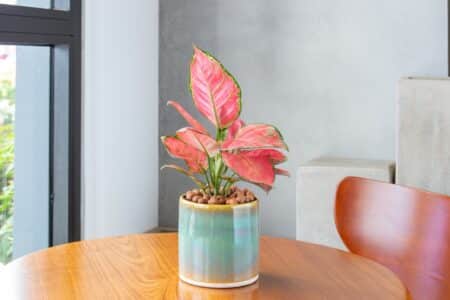
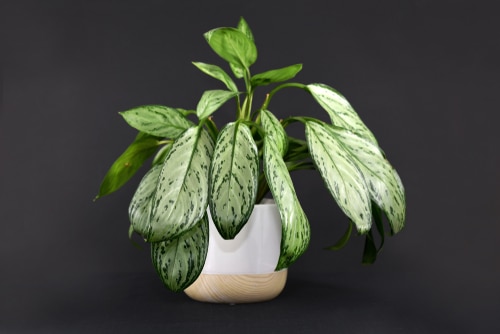
The Silver Bay aglaonema, also known as the painted drop tongue, is distinguished by its oval leaves with remarkable variegation across the center of the leaves.
Aglaonema Plants
Aglaonemas, sometimes known as Chinese Evergreens, are a popular category of houseplants native to New Guinea and tropical Asia. They are ideal for novices because they perform well in low-light environments and can withstand minor neglect.
They are supposed to bring good luck to a location and have been cultivated for generations as decorative plants.
When cultivated indoors, this plant family is also excellent at cleansing the air. Toxins such as formaldehyde and benzene are known to be filtered by the leaves.
Is Silver Bay a Popular Plant?
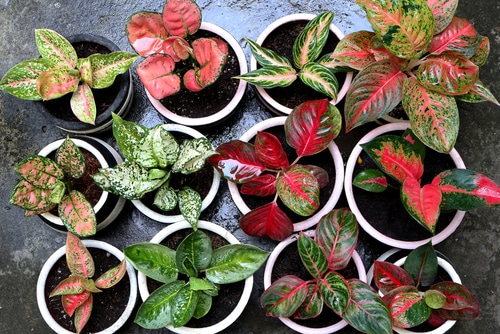
The Silver Bay Aglaonema is one of the more popular Chinese Evergreens. It was extremely popular in the 1930s and is regaining appeal among homeowners due to its lovely leaves and low-maintenance requirements.
Plants can be purchased in big-box stores, local garden centers and nurseries, and online vendors such as Etsy and Amazon.
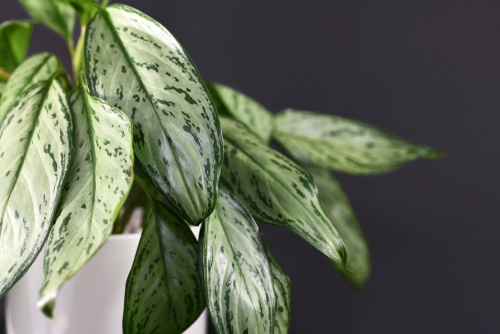
Plants mature to three to four feet tall, with an upright, bushy habit. The dark green leaves are oval and elongated, ending in a point. They reach a length of around ten inches and have a slightly leathery feel with gorgeous silvery patterns running through the heart of the leaves.
Care Guide
Sunlight Requirements
Chinese Evergreen plants are another well-loved plant because they tolerate low light conditions. They handle low, moderate, and bright light as long as indirect. Like other low-light plants, too much direct sunlight scalds or scorches the leaves, and the variegated leaves look best when the plant receives an abundance of bright indirect light.
Plants thrive in windows with eastern exposure and do well under fluorescent lighting. Hence why they grow so well in office buildings. They will lose their variegation and become leggy if they don’t get enough light, so supplemental light is helpful during the winter or if your home doesn’t have a spot with good indirect light.
Watering Needs
Silver Bay plants are prone to root rot if overwatered and surprisingly do much better when the potting soil is kept on the drier side. Allow the top two or three inches to dry out before watering the plant thoroughly. When temps are more relaxed and growth slows in the winter, this could be as infrequently as every 2 to three weeks.
Ambient Temperature
Native to tropical areas, these plants flourish when air temperatures indoors are kept between 65 and 80°F. They do best when the temperature is stable and doesn’t drop below 50°F, so it’s recommended to keep them away from register vents, exterior doors, and drafty windows, especially during hot or cold weather.
Relative Humidity
These tropical plants came from rainforests and jungles, so they prefer humidity levels to be 50% or higher. Plants do well in naturally more humid areas, such as the bathroom or next to the kitchen sink. If your air is dry, the best solution is to place the plant in a pebble tray half full of water.
Fertilization
For optimum growth, give your Silver Bay plant a half dose of balanced liquid fertilizer once a month during the warmer months—spring through early fall—when it is growing vigorously. Fertilize it when growth takes off in the spring at the bare minimum. When growth slows down in the cooler months, there isn’t any need to give it plant food.
Pest Concerns
Regularly scout your indoor houseplants for insect pests, checking your Silver Bay for scale, aphids, spider mites, and mealybugs. In the event of an infestation, spray all of the foliage with insecticidal soap, neem oil, or a solution containing one cup of rubbing alcohol and one teaspoon of insecticidal soap mixed into one quart of water.
Disease Problems
Aglaonema plants are pretty hardy and aren’t prone to many diseases. They are susceptible to root rot, especially when overwatered or when temperatures are cooler. If you suspect your Silver Bay has root rot, it’s best to immediately remove it from the container, cut off any mushy white roots, and replant it in fresh potting soil.
Propagating Tips
Similar to philodendrons and pothos plants, propagate Chinese Evergreen plants via stem cuttings. Unlike the others, aglaonemas can also be propagated by dividing plants. Both ways require little effort and only the cost of new containers, so propagation is a fantastic way to take one plant and create more.
Supplies
- Silver Bay Chinese Evergreen
- Sharp, clean scissors
- Water
- Sterilized glass jar, vase, or mug
- Container with drainage holes
- Potting soil or coconut coir
Propagation Via Stem Cuttings
Silver Bay stem cuttings root well and quickly in either water or potting soil like so many other houseplants. Start by cutting a healthy stem between two leaf nodes using clean, sharp scissors. After removing the cutting, you can put it into some water to root or plant it directly into a container.
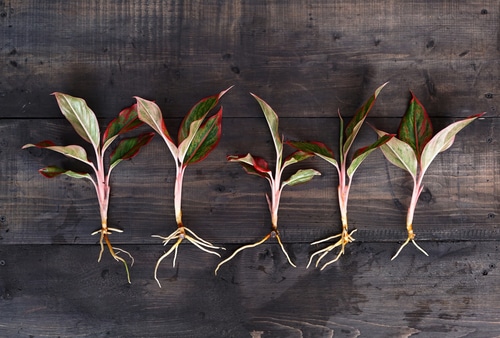
Rooting in Water
- Fill a clean glass vessel with water. Tap water is okay to use, or opt for distilled or filter water.
- Place the stem in the water, ensuring the leaf node is submerged.
- Put the jar or glass in a spot with bright, indirect light.
- Add water as necessary to keep the node covered.
- Change the water periodically to prevent microbial growth.
- Plant the cutting in a container after it begins rooting.
Rooting in Growing Media
- Fill a small container with a moist, well-draining substrate.
- Gently bury the stem in the center of the container, covering the node.
- Set the container in bright, indirect light.
- Keep the potting mix or coco coir slightly moist at all times.
Propagation Via Division
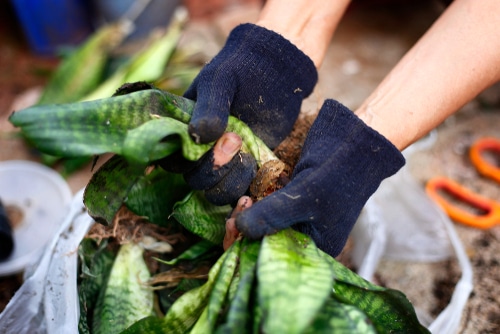
Dividing your houseplants is even easier than taking stem cuttings (and is often done with outdoor perennials). Simply put, dividing a plant takes one large, mature plant and separates it into smaller plants. It is beneficial to divide plants periodically so they aren’t getting too big for their container or the space they occupy in your home.
- Tip the plant on its side and use your fingers to loosen the soil around the edges of the container.
- Grasp the plant’s stem and carefully pull the plant and rootball from the pot.
- Loosen as much soil as you possibly can from the root ball, teasing it with your fingers.
- Gently pull the plant into sections, dividing the individual stems or creating small groups of stems.
- Replant the divisions in new potting soil, burying them at the same depth as in the original container.
- Water the growing media well.
- Set the container in bright, indirect light.
Pruning Tips
Aglaonema Silver Bay plants grow in an upright growth habit, so they don’t need to be pruned like vining plants. As a plant grows, it is natural for the bottom older leaves to dry up. When this happens, you can prune them off immediately or wait until they are completely dry and fall off on their own.
Toxicity
All Chinese Evergreens contain calcium oxalate crystals in their foliage, so they are classified as toxic to pets. When ingested and swallowed, these insoluble chemicals irritate the mouth and throat and may trigger vomiting, drooling, or diarrhea. To prevent ingestion or skin irritations, keep your plant in a spot inaccessible to young children and pets.
Additional Tips For Growing
- Yellow leaves on your plant are often a sign of overwatering. Let the potting soil or coco coir dry out considerably, although not all the way, before giving the plant more water.
- If you aren’t sure when to water, wait until the leaves begin to droop, then give the plant a good soaking.
- The tips of leaves turn brown and dry when the humidity is too low. This phenomenon is known as “tipping” and can be prevented by creating high humidity around the plant.
- Every year or two, repot your Silver Bay into a container that is a couple of inches bigger to keep it from getting rootbound.
- Grey spots on the leaves appear when a plant has cold damage because it was exposed to temperatures or cold drafts below 50°F.
- Uneven or crooked growth is due to uneven sunlight exposure. Rotate your plant often to keep the growth even.
Design Ideas
- Place a large Silver Bay in the corner of your living room or bedroom to brighten up the space and create a gorgeous focal point.
- In temperate areas where plants can live outside year-round, use them to decorate an outdoor patio or living space.