When it comes to garden plants, one of the most fascinating to watch is the beloved pumpkin. Each stage of the life cycle is punctuated and distinct: the tiny sprout poking out of the ground, long vines growing rapidly, gorgeous yellow blossoms opening, and little green orbs morphing into large orange globes.
Understanding the growth stages in a pumpkin’s life cycle gives you an exciting glimpse into the changes and processes happening within the plant. Watching the plants grow in your pumpkin patch is also a great learning experience if you have kids.
Pumpkin Growth Stages
Pumpkins have a long growing season, needing on average 75 to 100 days. Small decorative varieties are on the shorter end of this range, and large types may take up to 120 days to mature. They are classified as annual plants, going through the following distinctive growth stages to complete the entire life cycle in one year.
Planting
Plants fare best when the seeds are sown directly into the garden soil after the danger of frost has passed in late spring, and soil temperatures are above 70℉. If you live in the Northern part of the US, direct sow seeds in late May; direct sow seeds in early June if you live in a southern climate.
After planting, keep the soil damp at all times without being soggy. Pumpkin seeds have a hard seed coat that protects the embryo and a set of embryonic leaves containing food reserves. During imbibition, soil moisture softens the seed coat, allowing water to enter the seed and triggering respiration and metabolization of the food reserves.

Germination
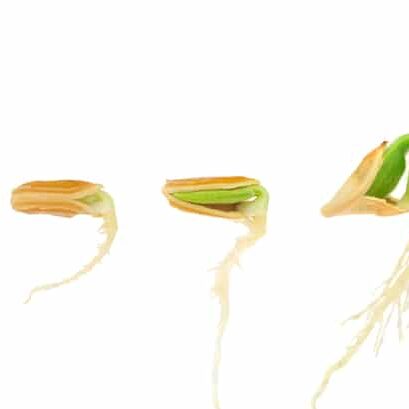
The first step in germination is the emergence of the primary root through the seed coat. Also known as the radicle, its job as the first root developed is to grow downwards and provide support for the seedling once it sprouts, anchoring it into the soil. After emerging, it starts absorbing soil moisture and nutrients.
You can expect germination about ten days after planting, whether you started seeds indoors or directly sowed them in the garden soil.
Sprouting
As the radicle absorbs water and nutrients, the two embryonic leaves within the seed push their way through the seed coat. These pseudo-leaves or cotyledons naturally grow upward, making their way through the soil, searching for the sun. After the cotyledons poke through the soil surface, the focus switches toward developing true leaves and photosynthesis.
First True Leaves Develop
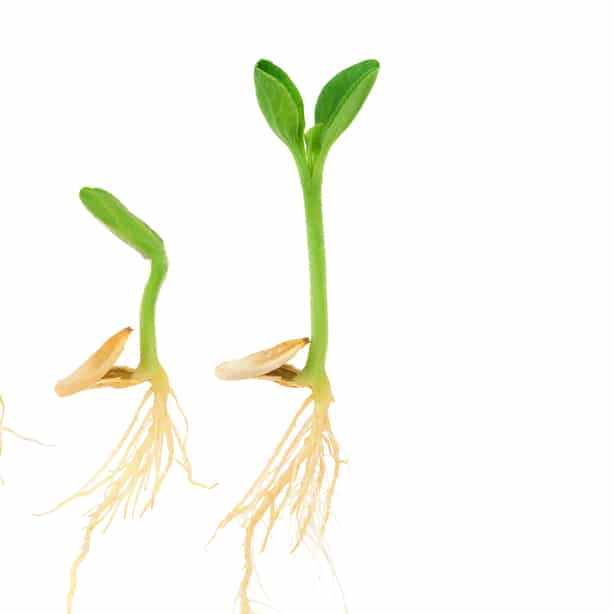
Once sprouted, the clock starts ticking. The seedling relies on food stores in the cotyledon to drive all of its metabolic processes, and they are dwindling. It’s vital that the seedling quickly forms leaves so it can start photosynthesis. About a week after sprouting, the first true leaves grow from the middle of the plant, between the sprouting leaves.
These true leaves are dark green and have jagged edges. They are capable of absorbing sunlight for photosynthesis, and the plant starts producing its own food. At this time, the cotyledons may wither and fall off.
Third True Leaf Develops
Now that the seedling has true leaves and can photosynthesize, growth happens much quicker. Plant growth hormones — known as phytohormones — work together rapidly to turn the seedling’s newly developed, undifferentiated cells into new leaves, including the third true leaf. Photosynthesis increases as new leaves form, further driving plant growth.

Root System Forms
With leaves forming at a rapid pace, the young plants are capable of photosynthesizing and producing the food needed to fuel other processes in the plant. Attention now turns to further developing the root system. Pumpkin plants don’t grow a taproot but develop a fibrous network of smaller roots within the uppermost 12-inches of soil to absorb water and nutrients.
Vine Growth
The plant’s focus now switches to outward vine growth. This growth stage between germination and flowering is known as the vegetative phase of plant development and lasts about eight weeks. During this developmental stage, the plant focuses on elongating vines, forming new leaves, and storing resources to use during flowering. At the peak of growth, vines can grow 6-inches daily.

Flowering
About ten weeks after planting, yellow male flowers appear on the vines. Pumpkins are monoecious, meaning they produce male and female flowers on a single vine. After about eight male flowers form, female flowers begin developing. Male flowers sit atop long skinny stems; female flowers have a slight bulge, or ovary, at the base that may develop into a fruit.

Pollination
Both male and female flowers open early in the day for about 4 hours and then close up permanently. When open, they rely on bees and other insects to transfer sticky pollen grains from the male flowers to the female flowers. If fertilization occurs, fruit set begins immediately. Unfertilized ovaries shrivel up and drop off the vine.
Fruit Set
After fertilization, fruit grows rapidly over the next 45 to 55 days, remaining green. The amount of time it takes to reach maturation depends upon the cultivar grown and local growing conditions. A healthy vine can form numerous fruits. To encourage the vine to develop large fruits, allow 3 or 4 to develop and then remove others as they begin growing.
Ripening
When the pumpkins have reached their full mature size and stop growing, ethylene — a gaseous plant hormone found within the cells — triggers the fruit’s pigment to change, and ripening begins. The rinds slowly change from their dark green color to brilliant shades of orange (or whatever the cultivar’s mature color is), signifying they are ready for harvest.

Senescence
As the ripening stage concludes and fruits are ready for harvesting, the plant enters the final growing stage of its life cycle. With seeds formed inside the individual pumpkins, there is nothing left for the vine to achieve. Phytohormones within the vines induce the genes responsible for senescence, and the leaves and vines die.