Basil is a simple and easy plant to grow. Sweet basil has a delicious flavor and aroma. It complements a wide range of dishes, including grilled cheese sandwiches, pizza, and pasta.
Sweet basil is an annual plant, which means it has a one-year life cycle in which it germinates from seed, grows to maturity, and then produces new seeds. They root readily from cuttings or germinate swiftly from seed.
You will become a better gardener if you understand the various stages that this herb goes through. Each step is critical to the plant’s overall development.
Today, I’ll go over the various stages of development it goes through as it develops.
Basil Growth Rate and Time
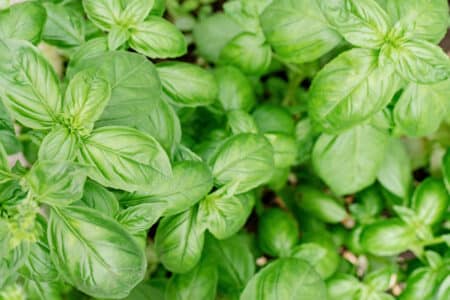
Basil plants produce a great number of leaves quickly. They can grow up to 24 inches tall in a season due to the abundance of leaves that sprout from their stems. Harvesting is possible after 7 to 8 weeks.
Stages of Growth
Seedlings
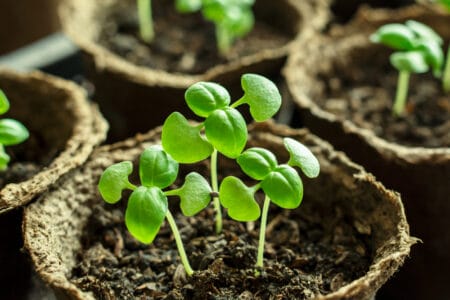
When grown from seeds, young basil seedlings emerge from the soil in about 7 to 14 days.

Juvenile Stage
At this stage, the basil plant develops to be around 12 inches tall and has the most leaves. The plant’s upper leaves can be cut at this time, but the small leaves at the bottom should be left alone to grow.
Pruning the plant in the appropriate places enables it to grow bushier, which is usually better.

Transition Stage
During the transition period, there aren’t as many leaves budding. Most basil plants can take two to three cuttings spaced two to three weeks apart before the end of this period.

Reproductive Stage
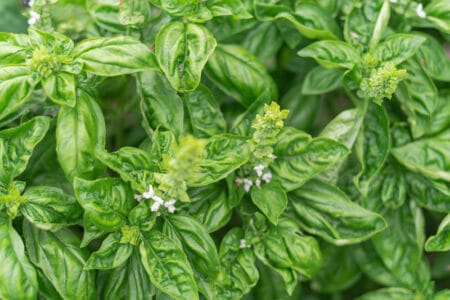
During the reproductive stage, the blooms begin to open. At this stage, the plant is producing blossoms to disseminate seeds and reproduce.
When the blossoms bloom, the plant stops developing leaves. This plant’s flowers might be white or purple. If you’re going to cook with basil, use the leaves before the plant produces blossoms for the best flavor.

Reasons Why Your Basil Plant Is Wilting
Basil is one of the most popular plants cultivated by culinary gardeners. And while it is usually easy to care for, it may be finicky at times.
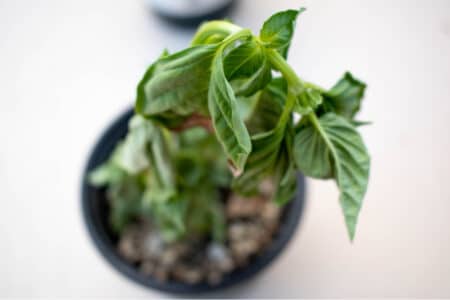
If you find yourself dealing with wilting basil, make sure you identify the underlying cause to find the cure. Continue reading for my advice on how to save your plant.
Not Watering Enough in Hot Weather
Basil wilts quickly if allowed to dry out for any length of time due to its relatively large leaves, which transpire a lot of water.
If the soil appears to be dry, immediately wet the basil. When growing potted basil, keep watering it until a trickle of water escapes from the drainage holes at the base.
If it’s an extremely hot summer day, shade the basil throughout the warmest portion of the day to allow it to recover from its wilted state without being exposed to the sun. When the basil has recovered, place it in full sunlight and keep the soil moist.
Basil should recover from wilt caused by underwatering after two days of damp soil and suitable growth conditions.
You may establish the correct balance of a wet yet well-draining environment with well-aerated compost and regular watering.
Mulch, such as leaf mold or well-rotted manure, around the base of the basil plant, conserves moisture and supplies nutrients to the soil, preventing the basil from withering.
Basil plants may require daily watering to avoid wilting on hot days, and every 3 or 4 days in cooler, cloudy weather to keep the soil wet to a depth of one inch.
Slow Draining Soil or Pots with Poor Drainage
Basil requires moist soil on a regular basis, but it is also vital that the soil drains efficiently so that the basil plant’s roots do not become caught in soggy soil, which would lead the basil to wilt.
To grow basil, use multi-purpose compost from the garden store since it holds water and lacks soil pathogens, such as fusarium wilt, which can cause your basil to wilt. A general-purpose soil mix can also be used.
Plant basil in large pots or containers with drainage holes at the bottom to allow excess water to drain and the soil to maintain a moisture balance while properly draining.
Drip trays or saucers should not be utilized to collect extra water beneath the sink. Drip trays can cause the soil to become too damp, causing the basil to wilt as a sign of stress.
If you’re growing basil indoors, either move the pot outside to water it so the water doesn’t harm your furniture, or lay a paper towel beneath the pot for about 30 minutes until the water stops dripping from the base.
Planting Basil in a Small Pot
Basil requires both direct sunlight and cold, damp soil, so the planter material must be carefully selected. Most established basil plants are sold in thin plastic pots in garden centers or supermarkets.
Unfortunately, because plastic pots conduct heat easily, the soil heats up and dries out faster than soil in more natural materials, such as terracotta, clay, or ceramic. As previously stated, dry soil will result in wilt.
A Lack of Pruning
If basil is not clipped on a regular basis, it may begin to blossom. The blooms attract pollinators and have a nice perfume, so this isn’t necessarily a bad thing, but once it blooms, the plant will go to seed and stop producing new leaves.
The majority of basil cultivars are annuals that only live for one year, but you can save the seeds for planting the following spring, though they are often relatively inexpensive at the garden center.
Regular pruning from the top of the plant allows more light to reach lower leaves. This results in a bushier, more productive basil plant that lasts much longer, so trim frequently to keep the plant healthy and prevent it from going to seed and appearing wilted.
Temperature Fluctuations
Basil is a delicate plant that is susceptible to temperature changes and extremes, which is why the majority of cultivars are classified as annuals.
Even if the temperature has not gone below freezing, basil may wilt as a stress indicator if there has been a period of constant moderate temperatures followed by a sudden cold snap.
Remove any leaves that have been injured by the cold, such as curled leaves or brown edges to wilting leaves to encourage more healthy leaf development and speed recovery.