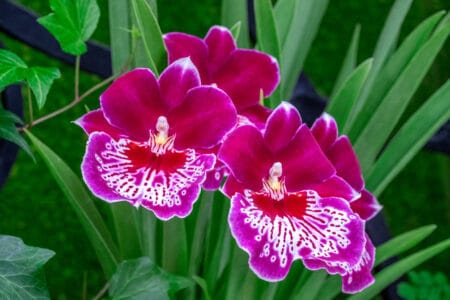
Paphiopedilum is a genus with approximately 80 species and hundreds of hybrids. They are known as slipper orchids because of the distinctive shape of their petals. Because they are difficult to clone, they are usually grown from seed into individual plants.
Paphiopedilums are popularly grown and hybridized orchids that require little maintenance. Some varieties have spotted or striped flowers and variegated foliage.
Paphiopedilum orchids produce beautiful, long-lasting flowers. Many people find success in growing them by following a few basic guidelines.
1. Paph. Barbatum (Bearded Paphiopedilum)
Paphiopedilum barbatum is indigenous to Peninsular Malaysia. It requires minimal care and blooms effortlessly. Aside from its high market value, orchid collectors are attracted to this slipper orchid for its beauty and rarity.
The evergreen Bearded Paphiopedilum produces 3 to 4-inch wide burgundy flowers. The sepals are greenish-white with dark purple vertical stripes.
In the spring, the individual flowers appear on upright stems. The leaves are narrow, elliptical, slender, and can grow up to 6 inches long.

2. Paph. lawrenceanum
Paphiopedilum lawrenceanum is a beautiful orchid native to Borneo. It can be seen thriving on limestone boulders covered in leaf litter.
This orchid bears white, dark green, fragrant flowers 4.5 inches in diameter. It blooms on a crimson inflorescence in the spring and summer.
Paph. lawrenceanum is an important parental species because of its large, colorful flowers and broad, flat dorsal sepal.

3. Paph. barbigerum
Paph. barbigerum flowers come in pink, brown, peach, red, and even mauve/purple shades. The thin, medium-green leaves of the plant have a purple flush around the base. Paph. barbigerum is incredibly tiny. The 3-inch flowers are usually carried on a 2.5-inch-tall stem.
Since it often grows in clusters, a mature specimen can have numerous growths without taking up much space. The orchid blooms several times yearly, typically in the fall and winter.
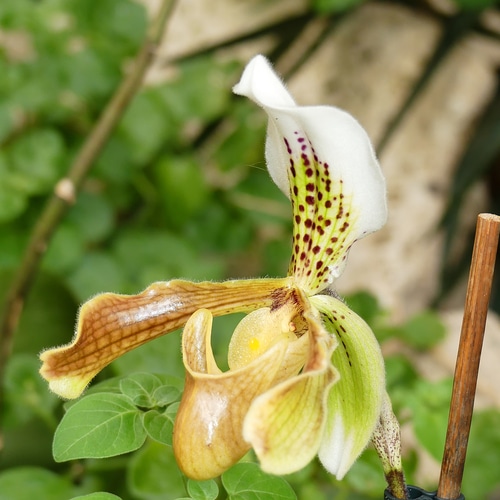
4. Paph. insigne
Paph. insigne can be found on steep cliffs near bodies of water in Assam, Meghalaya, Manipur, Nepal, and Myanmar. The orchid grows well in a shade house and is resistant to freezing conditions.
The plant grows in clusters, produces several 4-inch waxy, shoe-lip-shaped blooms, and is the easiest of all the Paph. species to cultivate. It is often used in floral arrangements as a cut flower.
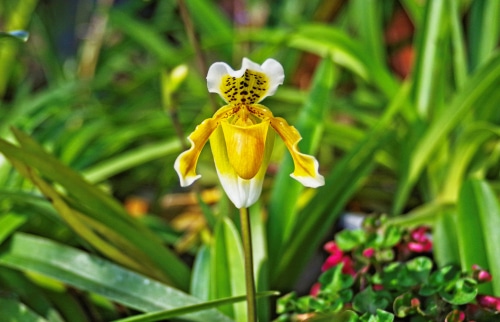
5. Paph. armeniacum (Apricot Orange)
The Apricot Orange Paphiopedilum features large, beautiful flowers unique to the species. Unlike many orchids, this species is gorgeous even when not in bloom. It can produce growths within its container.
The plants’ beauty is enhanced by their heavily marbled leaves, which are blue-green on top and purple on the underside. The round and clear yellow flowers appear from winter to spring and last around three weeks.
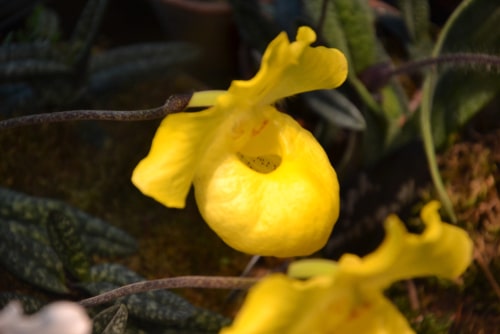
6. Paph. delenatii
A Vietnamese species that features rose-scented blooms and variegated foliage, the delenotii blooms from late fall to early spring and produces one or two apical flowers.
New growth appears around the root in late spring, and it flowers in winter. The dorsal and lower petals are white on the inside and pink on the outside with reddish streaks. Tiny hairs cover the petals on both of the whorls. The white pocket-shaped lip has pink stripes on it.
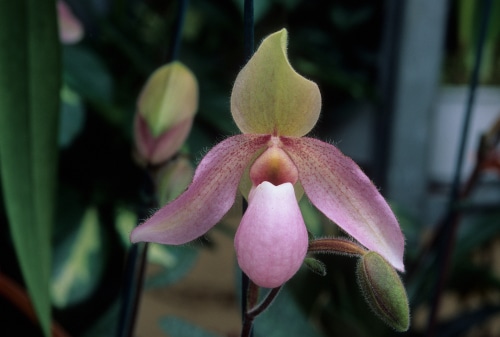
7. Paph. concolor
The paphiopedilum concolor orchid is also known as a single-colored paphiopedilum. The dark green oblong-shaped leaves have leathery textures and gray-green streaks.
The flowers have two wing petals, one upright petal, and a slipper-shaped lip. These yellow or cream blossoms have purple speckles and a diameter of 2 to 3 inches.
Unlike many other species, this orchid can thrive indoors with proper care and conditions.