Mulch is useful for a variety of reasons. It reduces weeds, stabilizes the soil, conserves water, and improves plant health. The appearance of your garden will improve drastically.
Consider mulch to be an investment with huge returns. Take your gardening to the next level by reading on to learn how to mulch.
How Much Will You Need?
Mulch is sold by the cubic yard. One cubic yard is enough to cover a 324-square-foot area one inch deep. To calculate your total, multiply your square footage by the desired depth in inches, then divide by 324.
The equation is: cubic yards required = square footage × desired depth ÷ 324.
You can use this calculator.
Please check out our detailed article on figuring out how much mulch you’ll need to figure out how deep you should lay your mulch.
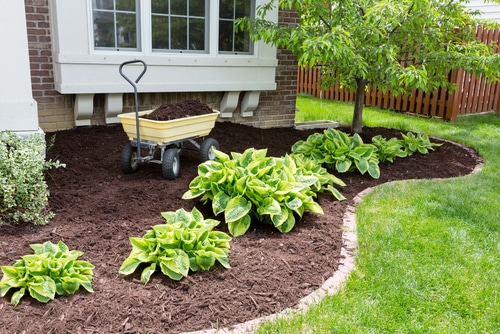
When to Lay Mulch
The best time to mulch a garden depends on the type of plant material and the weather conditions. Mulching season is generally from mid-to-late spring when the soil has warmed up from the freezing temperatures of the winter. If done too soon, it will slow down the warming process, which the soil requires to do its job.
You should avoid mulching too late into the fall. This can insulate the ground and prevent plant dormancy, which is necessary for plants to survive the cold winter months.
Step-by-Step Process
- Clean the area — Remove dried-up leaves, debris, sticks, and old mulch from previous years from your beds. You should also take the time to replace the edging around your beds. Make a clean, defined line between your bed and the lawn with a spade.
- Water your beds — If there hasn’t been any recent rain in your area, wet down dry beds. As previously stated, mulch aids in moisture retention. Before watering your beds, you may want to apply a pre-emergent herbicide to prevent weed seeds from germinating. Because it needs to be watered to activate, now is the time to do it!
- Remove all weeds — One of the primary benefits of mulching is that it inhibits weed growth, so removing weeds gives you a head start.
- Spread the mulch — Shovel mulch from your wheelbarrow into small piles or shake mulch from your bag. Then, spread the mulch with your hands, paying special attention to the base of your plants. How much mulch should you put down? Mulch should be two to four inches thick when spread. Weeds can get through if your mulch is too thin. Mulch that is too thick prevents water from reaching the soil.
- Water after mulching — Although this is an optional step, a final watering can help the mulch settle into place.
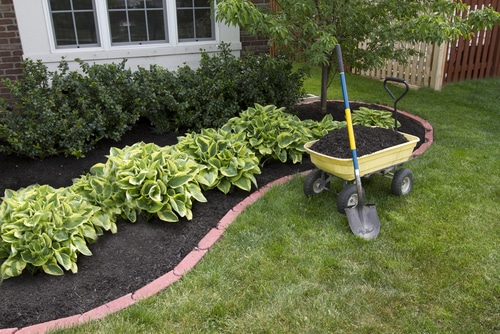
How Close to Plants Should You Mulch?
It’s critical to keep your mulch three inches away from the base of your plants and tree trunks when spreading it. Don’t create a mountain of mulch around your plants. Even though you may see this from time to time, it is not good for the plants.
Keeping a safe distance between plants and mulch helps prevent plant rot and other diseases, prevents insect nesting grounds, and promotes air circulation.
What Is the Easiest Way to Spread Mulch?
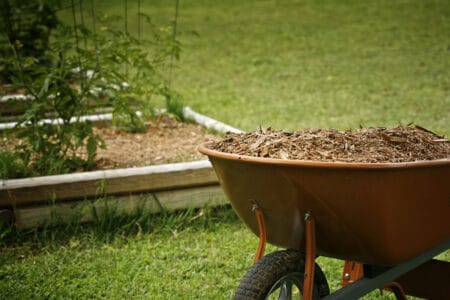
Although it is possible to carry bagged mulch to a garden by hand, it is much easier to transport it in a wheelbarrow or garden cart. The best way to transport loose mulch is in a wheelbarrow. If you don’t have a garden cart or a wheelbarrow, shovel the mulch onto a plastic tarp and drag it to the garden.
What Should I Put Down Before Mulching?
As previously stated, using a pre-emergent herbicide to treat the desired area will help ensure that all of your hard work preparing your mulch bed does not go to waste. Weeds can leave tiny seeds that may survive your initial attempt to de-weed the mulch bed. A pre-emergent herbicide will prevent the seeds from germinating, preventing weeds from growing beneath the mulch surface and stealing valuable nutrients from your soil.
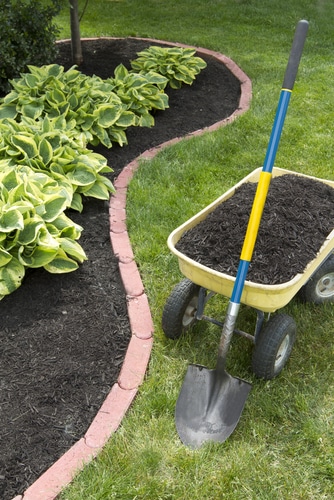
Can You Put Mulch Over Weeds?
Yes, you can cover weeds with mulch. In fact, spreading mulch over weeds will help kill them by blocking sunlight from reaching their leaves.
That being said, it is best practice to simply pull out any large visible weeds before mulching. Again, using a pre-emergent herbicide before mulching will help prevent weeds from growing in between the layers of mulch. Because the soil below is moister and looser, those that peek through the mulch are also easier to pull out.