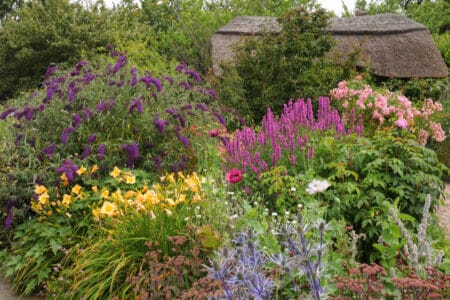
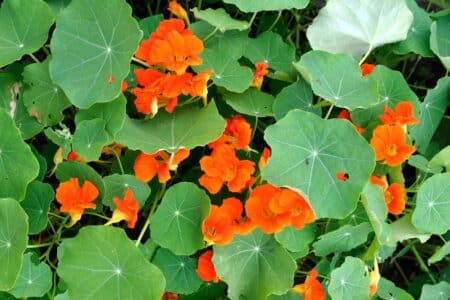
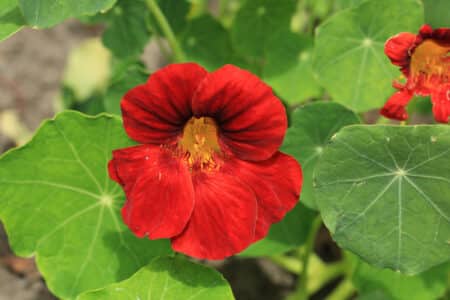
Nasturtium flowers are great additions to a casual, cottage-garden theme. Wide varieties are available for this well-loved plant, such as climbing varieties that adorn walls and fences, cascading types used for hanging pots, and many more. Nasturtiums are easy to grow, but you should know a few things before adding them to your garden.
Why You Should Consider Growing It
Nasturtiums (Tropaeolum spp.) come in rich, vivid, jewel-toned colors. They are one of those rare plants that do better when neglected. In addition to their beauty, they are entirely edible and can be added to many recipes. Their flowers, leaves, or unripe seed pods can be sprinkled on a salad for a peppery, cress-like flavor.
There is a nasturtium variety for practically every gardening need. Bushy varieties are great plants for borders and edges. In contrast, cascading varieties are ideal for walls and pots, and some climbers add a surprising amount of height to the landscape.
Nasturtiums are commonly used to lure squash bugs or aphids that would otherwise infest vegetables. This plant is frequently grown with brassicas like cabbages, cauliflowers, and broccolis because its edible leaves and flowers have a peppery flavor and scent that discourage pests. They also attract pollinators and helpful insects like hoverflies, which eat many common pests.

When To Plant It
Nasturtium is a cool-season annual. It cannot tolerate temperatures above 85℉, so it is advised to plant them in early spring or late fall. Planting them after the last spring frost in Zones 2 to 8 will result in spring and early summer blooming. In tropical climates where freezes are rare, you can sow nasturtium seeds in the fall for winter blooming.
General Care
Water Needs
Nasturtiums need weekly watering or more if grown in a greenhouse or sunny vegetable patch. Nasturtiums can endure mild droughts, but their flowers will likely fade, and their leaves will become lanky without adequate moisture.
Amount of Sun
Nasturtiums thrive and bloom best when planted in full sun, a location that receives six to eight hours of direct sunshine daily. However, they need shade during the hottest hours of the day to prevent their leaves from scorching and browning. Although the plant can survive having only three to six hours of sunlight per day, it may not bloom as profusely.
Fertilization
Nasturtiums grow well in less fertile soils and rarely require supplemental fertilizer unless the soil is severely deficient. A fertilizer high in phosphorous may help promote flowering instead of foliage growth. Excess nitrogen promotes more leaves than flowers, so finding the proper balance is critical. Using a 10-10-10 fertilizer should be sufficient.

Other Maintenance
Vining nasturtiums can become leggy and messy looking. For this reason, pruning the longest vines by 6 to 12 inches is recommended. Nasturtiums respond well to pruning, so they can be pruned back during the growing season when you notice that the growth looks thin and stretched out. This process helps stimulate new growth for leaves and flowers, encouraging more branching instead of producing longer, leafless vines.