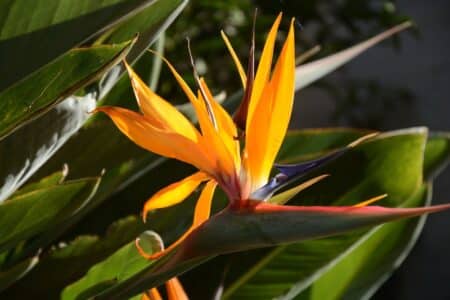
A bird of paradise (Strelitzia reginae) enjoys the heat and thrives in temperatures above 50℉. It is hardy in Zones 10 to 12 and grows best in well-drained, organically rich soil. It is moderately tolerant of salt, making it an ideal plant for protected coastal areas.
It can grow 4 to 6 feet tall and wide but adapts well to containers. Many gardeners in colder climates plant it in a pot and relocate it outside during the summer.
To get the most out of your bird of paradise, cultivate it with companion plants that complement its color and shape and have similar growth requirements.
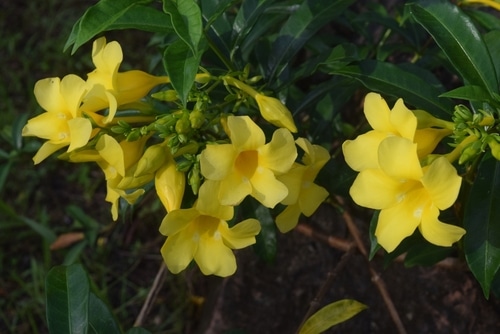
1. Carolina Jessamine (Gelsemium sempervirens)
Carolina jessamine is one of the most beautiful vine plants to pair with the bird of paradise. Its yellow blossoms look incredibly wonderful as they adorn vines draped on an arbor. This tall, climbing plant can also be used as a backdrop.
This plant requires the same water requirements as a bird of paradise. Although it is more drought-tolerant when established.
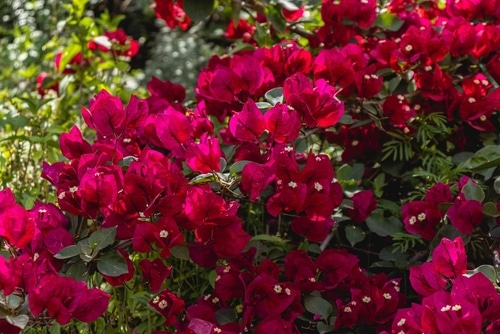
2. Bougainvillaea
Bougainvillea flowers have long been prized for their beautiful inflorescences, which consist of little white flowers covered in colorful, paper-like bracts. In warm areas, these thorny, evergreen vines add splendor to the landscape with their long-lasting flowers.
The flowers and the texture of this plant mix well with the orange blossoms and large leaves of the bird of paradise.
3. Peruvian Lily (Alstroemeria)
Peruvian Lily adds floral radiance to the bird of paradise foliage. Its flowers come in various colors, including yellow, pink, orange, and white, attracting pollinators like bees and butterflies.
Despite being sensitive to several common garden pests such as slugs, mites, and aphids, this plant is generally free from disease and pest infestation.

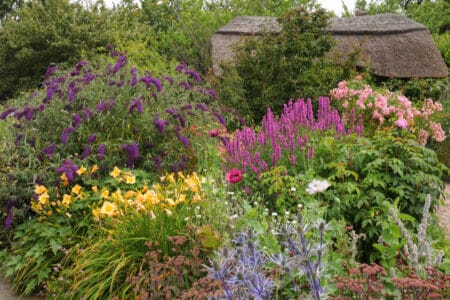
4. Dwarf Sea Holly (Eryngium planum ‘Blue Hobbit’)
The ‘Blue Hobbit’ dwarf Eryngium grows 8 to 12 inches tall at maturity. Its foliage and blossoms are a striking metallic blue that contrasts with the bright orange blossoms of the bird of paradise.
Because of its compact nature, this plant looks great in mixed pots or when placed at the front of the landscape. It also tolerates dryness and thrives well in hot, coastal areas.
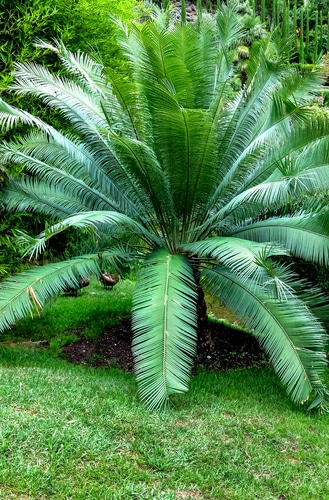
5. Sago Palm (Cycas revoluta)
Sago palms are tropical plants that are often grown as houseplants. The growing conditions indoors somehow resemble the conditions of their natural habitat. Sago palms grow well in containers and add a tropical atmosphere to the room when combined with a bird of paradise plant.
They have glossy, straight fronds that give them the appearance of a little palm tree. They are also relatively pest-free.
6. Bromeliads
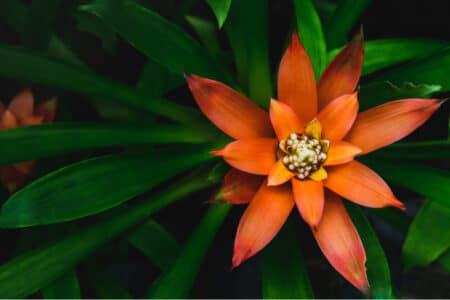
Bromeliads are attractive foliage plants with red, green, purple, orange, and yellow leaves. These leaves are often decorated with bands, stripes, and dots. Despite appearing high-maintenance, they’re drought-tolerant and easy to care for.
Bromeliad plants add an exotic, sunny, and tropical flair to the landscape. Like the bird of paradise, they can’t tolerate standing water and need well-drained soil for healthy growth.
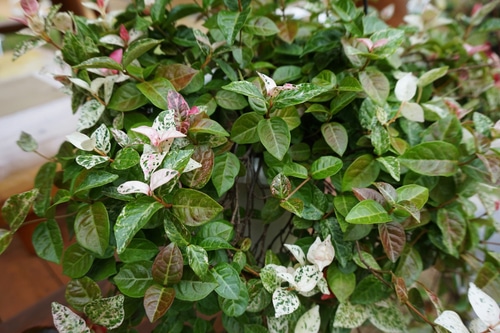
7. Asiatic Jasmine (Trachelospermum asiaticum)
Asiatic jasmine is perfect for filling in gaps around and beneath plants and trees or cascading over a wall. It is drought-resistant, pest-free, and salt-resistant, and its fast growth makes it an excellent ground cover plant.
Asiatic jasmine’s texture perfectly complements the large, glossy leaves of the bird of paradise plant. Its thick-growing and dense evergreen foliage serve as an attractive turf grass alternative.