Worm castings are one of the most advantageous and beneficial organic fertilizers you can use in your garden. Packed with nutrients, microorganisms, and a host of other ingredients, they offer more benefits to your plants than solely enhancing growth and yields. This organic soil amendment also helps to improve the soil’s structure and health—all due to helpful little earthworms.
Advantages of Using Worm Castings
- Packed with essential plant nutrients that help make plants grow quicker.
- All of these nutrients are water-soluble, making them immediately available to plants.
- They are known to degrade the exoskeleton of some insect pests naturally, so they work as a natural pesticide, repelling insects like spider mites and aphids.
- Consist of beneficial bacteria and microbes that help strengthen plant defenses and protect them from disease.
- Castings are richer in nutrients than compost so you can apply less.
- It contains humic acid, which improves nutrient availability, assists plant nutrient uptake, improves drought tolerance, and fosters soil microbial populations.
- Castings are pH neutral, which helps bring the pH closer to neutral and buffers the soil from future pH changes.
- Increases yield by as much as 25%.
- Worms remove heavy metal contaminants (copper, cadmium, lead) from the soil in a process known as bioremediation and absorb the heavy metals into their bodies. The resulting castings are free of heavy metals.
- The nitrogen is slowly released, and they don’t contain any chemical salts, so there is no risk of burning your plants.
- Richer than finished compost in beneficial proteins, polysaccharides, and other nitrogenous compounds like amino acids.
- Promote a closed-loop agricultural system by reducing the garden and food waste going into landfills, turning the waste into a beneficial organic fertilizer.

What Exactly are Worm Castings?
There’s no way to put it politely, but worm castings are worm poop, a by-product of a process called vermicomposting. Worms work their way through the soil, ingesting organic materials and breaking down the complex nutrients into a rich natural fertilizer. Once the materials pass through their digestive system, the waste is excreted as a product we know as castings.
Unlike cow or chicken poop (or manure), worm castings are odorless and don’t contain any excessive amounts of nitrogen than can burn plants. The castings contain beneficial microbes, humus, amino acids, and other compounds that improve plant growth and soil quality. Worm castings also help feed the soil’s beneficial microbes that improve nutrient availability and uptake, stress tolerance, and disease resistance.

Comparing Worm Castings to Chemical Fertilizers
There isn’t any doubt that synthetic chemical fertilizers are a quick solution to helping your garden plants grow quickly and increase yields—which are some of their significant advantages—but there are some serious disadvantages to using them. These negative impacts are one of the driving reasons more and more gardeners look towards alternative, natural, organic products.
Chemical Fertilizers:
- Contain highly-soluble nutrients that can quickly leach out of the soil and contaminate groundwater.
- In chemical terms, they contain mineral salts that can build up in the soil and, at high levels, burn plant roots and cause nutrient toxicity.
- Repeated applications lower the soil pH, killing beneficial soil microbes and helpful earthworms.
- Prolonged use can degrade soil fertility, damage soil structure, and increase compaction.
- High nitrogen levels may cause plant stress, making them more susceptible to disease and pests.
On the other hand, corm castings can also boost plant growth and yields while offering additional advantages without the negative impacts chemical fertilizers exhibit. Castings are free of chemical salts, and their beneficial components (amino acids, polysaccharides, humic acid, and microbes) can improve the soil pH and help build and repair the soil structure.

Different Ways to Use Worm Castings
- Improve Seedling Germination: Mix castings into your seed starter mix as you prep to start your seedlings indoors. It will provide necessary nutrients to boost seedling growth and helps retain moisture around the roots.
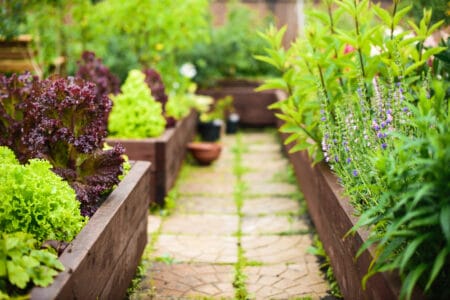
- Pre-Planting Soil Conditioner: You can mix them into the potting soil for containers or raised beds or your garden soil when preparing the soil before planting. The castings will improve the soil’s health and structure.
- Planting Fertilizer: When it’s time to transplant your seedlings to the garden, or you’re planting items purchased from the nursery or garden center, add castings to the bottom of each planting hole to help root growth.
- Side or Top-Dressing Organic Fertilizer: During the growing season, sprinkle worm castings on the soil surface around the plant instead of using synthetic fertilizer to help your plants grow strong and healthy.
- Give Your Plants a Drink of Worm Tea: Similar to compost tea, worm tea is made by steeping the worm castings in water to create liquid fertilizer. You can use the worm tea for immediate absorption into the leaves as foliar spray or apply it to the soil monthly when you water your garden plants.

Do Earthworms Provide the Same Benefits as Adding Castings?
The earthworms naturally in your garden soil will undoubtedly provide the same benefits as adding castings as an amendment or fertilizer—just on a much smaller scale as the population isn’t hefty. There are benefits, though. The earthworms add that you won’t see just by adding castings, which is why you should encourage them into your yard and garden.
They naturally add castings to the soil, enriching the soil fertility and providing the benefits listed above. But the extra advantages make it worthwhile to have them in your garden.
- As earthworms tunnel through the soil layers, they help “mix” it, bringing deeper soil in the profile up towards the surface.
- The earthworm tunnels help further to improve the soil structure, aeration, and drainage.
- When consuming soil and organic material, they extract harmful fungi, bacteria, and toxins from the ground.

How to Encourage Earthworms to the Garden and Keep Them There
There are different ways to encourage earthworms to your garden and stick around once there. Be forewarned, though, that the little wrigglers typically don’t like to move a significant distance to relocate—this expends a tremendous amount of their energy—but you can bring them in from neighboring areas like your lawn or flowerbed.
- Keep your garden healthy and weed-free, with few pest problems.
- Water regularly to encourage robust root systems in your garden plants without overwatering. Worms like moist soil to move through but don’t want to be waterlogged because they need a balance of oxygen and water in the soil profile.
- Give the earthworms a regular supply of organic material to eat by sprinkling cornmeal across the soil surface. Additionally, cornmeal acts as a herbicide and kills ants.
- Avoid using pesticides that may harm earthworm populations.

Can I Make My Own Castings?
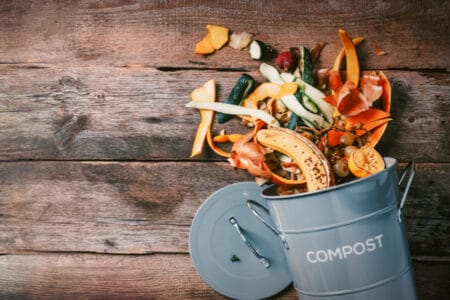
Instead of buying worm castings, if you have the space, time, and desire, you can start vermicomposting to make your own! Unlike traditional composting that needs to be done outdoors, you can set up a vermicompost bin indoors because it doesn’t give off an odor like a compost pile. Plus, it will reduce the food scraps from your kitchen!
You’ll need a container for the worm bin, bedding, worms, and food scraps to get started.
- Plastic storage bins or prefabricated stacking worm towers are the two most commonly used containers. Plastic bins may need some slight modifications to add holes for ventilation and drainage, but you can customize them to fit your available space. Just make sure they aren’t clear and have a lid.
- Bedding must be non-toxic, full of carbon for nutrition, and soft enough not to irritate or scratch the worms’ skin. It also needs to hold moisture well and be easy to eat. Standard options are corrugated brown cardboard, coco coir, shredded paper, half-finished compost, or straw.
- Red worms (Eisenia foetida) are the most popular species for worm bins. They are also known as red wigglers, manure, or branding worms and are about 4-inches long with a yellow tail and red body. Red wigglers have an enormous appetite and faster metabolism than common earthworms.
Once your worm bin is up and going, it will take four to six months until the first harvest is ready. The finished castings will have a rich, dark coloring, and the bin looks like there is very little uneaten scraps or bedding.

Buying Earthworms for Your Garden
To increase the number of beneficial earthworms in your garden, you can purchase adults or egg cocoons to add to the soil. You can find them at local lawn and garden centers or even places where fishing bait is sold. Then use the above tips to get them to stay in the garden to provide the benefits.