Raspberries are not only delicious, but they are easy to grow! All you need is one plant to produce an abundance of delightful sweetness.
Understanding how raspberry plants grow is critical to having a successful harvest. In this article, I’ll focus on the growth rate of the raspberry plant so that you can maximize its growth in your garden.
Germination
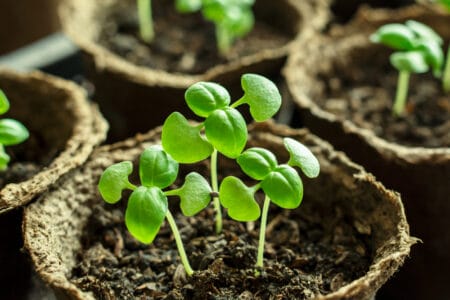
The first step in raspberry development is germination. When raspberry seeds pass through an animal’s digestive tract, its digestive enzymes stimulate the seeds and help them germinate. Raspberry seeds begin to grow 11 – 21 days after they’re. Seedlings can be transferred to a larger container when they measure 0.7 – 1.9 cm long.
Vegetation Growth
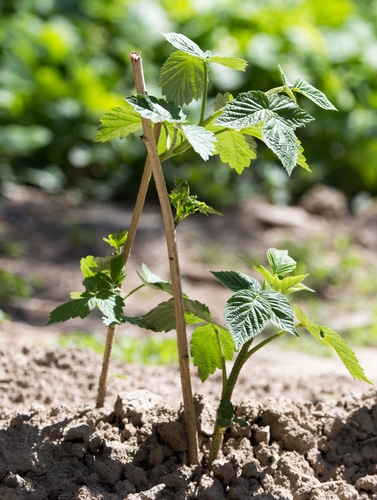
Plants must undergo photosynthesis to grow and nourish themselves. Raspberry plants develop from either root buds or buds located at the base of the plant’s crown. Instead of growing taller, the buds divide outward along the plant’s stems.
Flowering
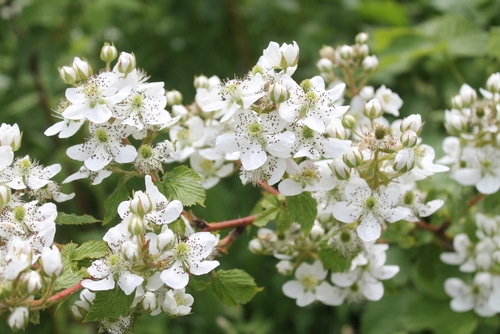
Did you know that the flower is the organ that plants use for reproduction? The flower’s petals are generally vivid in color and release a pleasant aroma to attract insects, hummingbirds, and butterflies, which help to pollinate the flower as they land and fly to neighboring flowers.
The flowers of raspberry plants are white, and they have several stamens (the male pollen-producing components) arranged around the flower’s torus, which is a white pouch located in the center of the flower. This is where the flower’s female fruit-producing parts (the pistils) are located.
Flower buds form throughout the winter. The raspberry plant then develops into a thicket that can grow to a height of 10 feet. It also produces several seeds during this stage, which remain in the ground until the climate prompts their germination.
Pollination
Raspberry plants rely on insects to transport pollen from their stamens to the pistils. Assuming that the pollen is viable, the stigma is receptive, and that they are compatible, the pollen will travel down the styles and into the flower’s ovules; this is where fertilization takes place.
Fruiting
Raspberries are mature and ready for harvest after 16 – 18 months. Of course, this period can vary depending on seed quality, environmental conditions, and the care the plant receives.