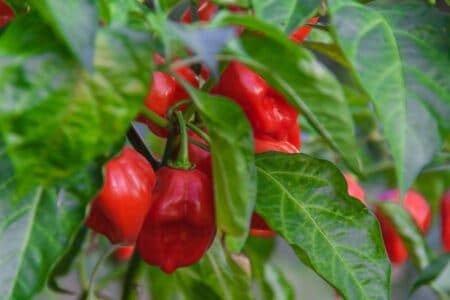
Poblano peppers are easy to grow and have a mild spicy flavor. Unripe poblano peppers have a gorgeous dark green hue and a rich, savory flavor. As they ripen and turn red, they can be dried out and crushed. In this state, it is called an ancho chili pepper.
If you’re considering growing poblano peppers in your garden, we’ve prepared information about its lifecycle that will help you maximize the growth and quality of peppers you grow.
Germination
Poblano peppers are tropical plants, so plant seeds in a quarter-inch layer of wet soil when outside temperatures are between 75 – 85 degrees Fahrenheit. Their seeds can take up to 4 weeks to germinate in optimal conditions.

Growth
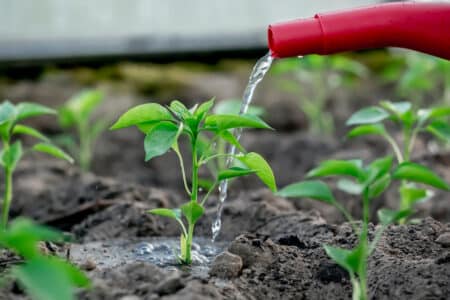
Small white sprouts will appear 1 – 2 weeks after germination. Approximately 4 – 5 weeks after germination, the seedling will grow its first true leaves. The seedling is ready to be transferred to your outside garden when it produces its second set of leaves, known as third true leaves.
To fortify the plant’s roots, gradually move it closer to a window where it can get sunlight. Once the seedling is around 3 inches tall or 3 – 4 weeks after it sprouts, transfer it to a loamy, organic potting soil.

Flowering
The pepper plant will produce white or yellow flowers as it grows. Once fertilized, a fleshy pericarp will grow, thicken, and expand as the pepper matures.
Just a quick tip: Pinch off any early blossoms that grow on your pepper plants. This will encourage them to focus on growing more larger peppers later in the season rather than fewer smaller ones early on.
Pollination
Some peppers self-pollinate, while others rely on insects, butterflies, and small birds for pollination.
Fruiting
Once the flowers have been pollinated and fertilized, the poblano peppers will begin to take shape and grow. A pericarp develops, thickens, and swells to form the pepper.

Ripening
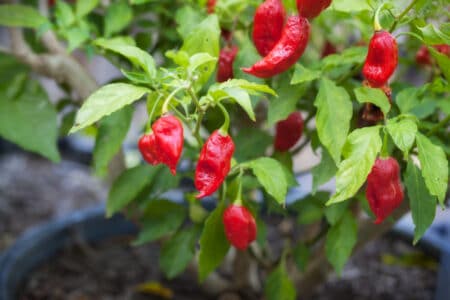
You can harvest poblano peppers while they are still young and green. However, keep in mind that they will become spicier and turn orange or red as they mature. It’s a good idea to wear gloves when harvesting poblano peppers to avoid skin irritation.
The peppers can be stored in the freezer for later use; their seeds can be stored and planted to grow a new crop of peppers.