Orange, a combination of red and yellow that makes one of nature’s most striking hues, energizes and illuminates any setting. Orange flowers are a beautiful compliment to any garden or arrangement, and their deep symbolic connotations only serve to increase their allure. Before choosing any clematis variety for your garden, consider its mature height, blossom shape, and color.
For this post, I will show you some uncommon, orange-colored clematis that will undoubtedly add color to your landscape. To be fair, a lot of these take on more of a yellow hue that borders on the edge of orange.
1. Clematis ‘Orange Peel’
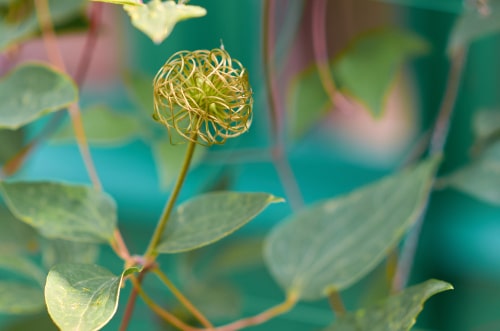
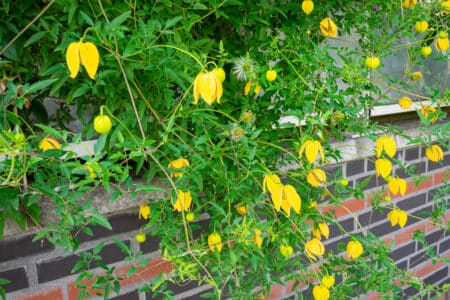
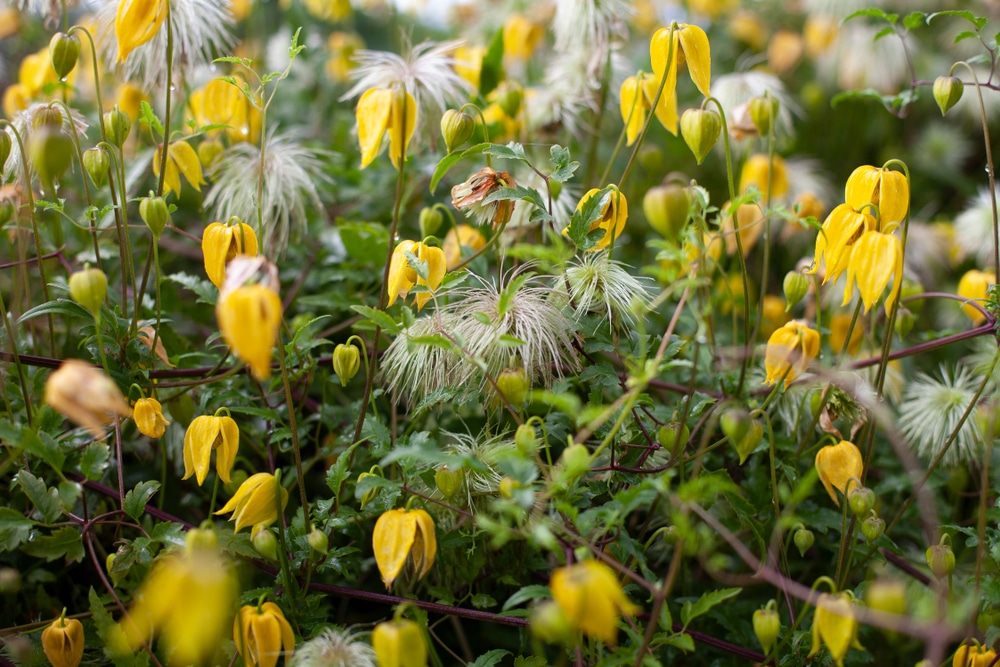
The clematis ‘Orange Peel” may be an herbaceous perennial, a deciduous or evergreen shrub, or both. Its bell-shaped flowers start out with a bright golden yellow color and then mature into a rusty orange color. This variety also has lovely seed heads and finely cut leaves.
The ‘Orange Peel’ variety is drought-resilient and can easily survive in hot, sunny environments. Surprisingly, it can thrive in less-than-ideal settings where one would expect them to wither and die. It is not tolerant of particularly heavy clay soils that get waterlogged, nor will it accept any excessive amounts of irrigation. This plant is a sun lover (6 hours of direct sun), but it likes to have cool “feet,” so protect the roots by mulching or planting some shallow-rooted, low-growing shrub or groundcover at the base of it.
This gorgeous orange-blooming vining perennial is ideal for adding long-term interest to arbors, trellises, and fence lines since its vines may live for at least twenty years and sometimes much longer.
2. Tangutica ‘My Angel’
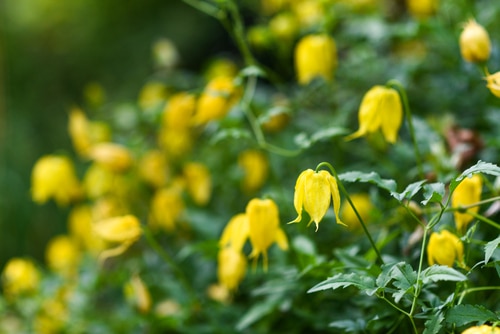
A strong and long-blooming vine, ‘My Angel’, produces masses of bell-shaped blossoms from July all the way through October. The outside of the blossoms may vary in color from bronze-brown to dark orange, while the inside of the bell is yellow. The flowers are then succeeded by exceedingly decorative seed heads that retain their fuzzy appearance throughout the winter.
‘My angel’ is a member of clematis group 3, which means it blooms very late in the season. They do well in full sun or partial shade, wet soils with good drainage, and well-drained conditions. Late in winter, you need to trim the vine, as it needs hard pruning to thrive in the following year.
‘My angel’ can be taught to scale walls, trellises, fences, arbors, porches, lampposts, and other immobile structures. Small gardens especially benefit greatly from the architectural height and framework that these structures provide, especially when covered by clematis. The vine also be planted to grow through and over bushes, to climb over old stumps, or simply as groundcover.
3. Curlyhead Clematis
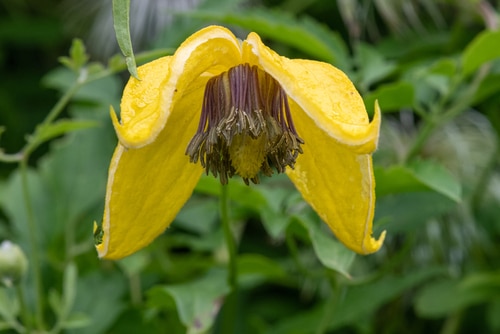
The curlyhead clematis is a lovely bush variety that grows into elegant mounds without producing vines. In the spring, it blooms with flowers that vary in color from light yellow to golden orange. These are followed by spectacular seed heads that mature in the summer. This variety may be an herbaceous perennial, deciduous or evergreen shrub, or both.
Plant the curlyhead vine in a location that gets full sun to moderate shade and has soil that is wet to sometimes dry and has good drainage. Clematis originated in acidic forests and woodland margins, so it prefers soil with a high pH level.
The fuzzy, pendulous, solitary blossoms are bell-shaped and usually appear between April and June. They attract bees, in particular. The seed heads that follow are quite beautiful. Because the plant is difficult to reproduce via cuttings, you should save the seed.
Clematis curlyhead is an excellent choice for planting in forest or perennial borders, as well as native or rock gardens.