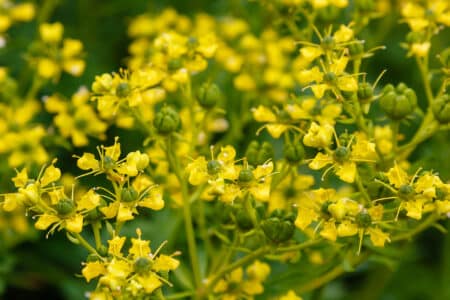
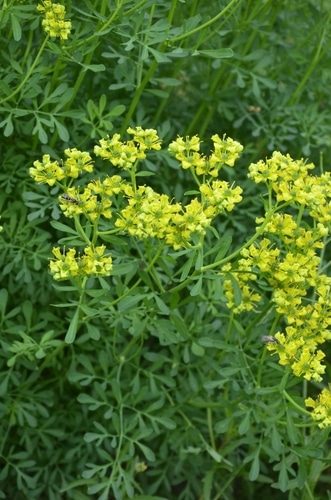
Rue is a gorgeous, aromatic perennial plant with culinary and medicinal uses. This shrubby plant is hardy from zone 4 to zone 9, thriving with minimal care. It can be harvested and used to repel insects indoors.
Due to its many uses, many gardeners wish to cultivate rue in their backyards. Continue reading to learn more about growing rue in your garden.
Why You Should Consider Growing It
Rue is typically grown for medicinal purposes. Despite not being commonly grown in backyard gardens, it makes a great addition because its powerful odor repels many animals that could damage the garden, including dogs, cats, and Japanese beetles. It also adds interest and fragrance to borders or edges around patios or porches.
It is also an excellent addition to butterfly gardens because it is a host plant for two of the most helpful butterflies, the giant, and the black swallowtails. This drought- and deer-resistant shrub is a charming feature in a sunny garden with poor soil but must be appropriately managed to prevent it from taking over the patch. It looks great as an individual plant in herb and rock gardens.
Rue oil is frequently used as a fragrance in soaps and cosmetics. Its benefits are primarily attributed to its antibacterial and antifungal properties. However, rue is rarely applied to the skin because of its toxicity and harmful effects.
When To Plant It
Rue is typically planted in the garden from seed or potted nursery seedlings when spring soil temperatures reach around 70ºF. It takes one to four weeks for seeds to germinate. For a head start, sow rue seeds indoors three to four weeks before the last spring frost. Direct-sow or transplant seedlings outside once the frost threat has passed.
General Care
Water Needs
Rue plants thrive in hot, dry regions and are drought resistant once established. Water to root depth every three weeks, but more frequently during extended dry seasons. Remember that overwatering the plants can cause root rot, so ensure proper drainage.
Amount of Sun
Full sun, or at least six hours of direct sunlight most days, is excellent for rue development. Although it can tolerate partial shade, the plant will produce fewer flowers without adequate sunlight.
Fertilization
Rue plants are hardy and don’t need additional soil fertilizers. If too many nutrients are available, the plants will grow more foliage at the expense of flowers. Rue can grow successfully in poor but well-draining soil, but if you want to apply fertilizer, go for a complete fertilizer with equal portions of nitrogen, potassium, and phosphorous.
How to Harvest
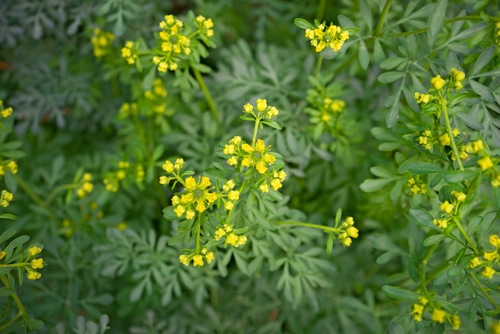
The essential oils in rue plants deplete when it blooms, so harvest them before it blooms. Gather rue in the morning when the essential oils are most potent. After that, the cuttings can be used immediately, dried, or stored for up to a week. Rue is also frequently harvested for dried flower use. It can also be used to make sachets meant to repel pests like ants and fleas.
Wear gloves and long sleeves to protect your skin when working with rue. Cut a mature plant at the ground level with pruning shears. After that, hang it to dry in a dark, dry place until the leaves are brittle. Store the dried rue in an airtight container before using it in sachets or other applications.