The summer sun plays a big role in the number of beautiful blossoms many popular garden flowers produce. Begonias (begonia spp.) are no exception. This beloved plant provides stunning flowers in locations from sunny borders to shady nooks, with some begonias being planted just for their spectacular leaves.
Most begonia species can easily handle 4 to 6 hours of daily sunshine. However, there are certain begonias that require more sun than others. And some begonias prefer nothing but shade.
In this article, I will focus on begonias’ need for sunlight and how it varies depending on the different cultivars.
What Is Full Sun?
A plant that requires “full sun” needs at least 6 hours a day of direct, unobstructed sunshine. This is the minimum amount of direct light a sun-loving plant needs to survive.
Yet the brightness of the sun changes throughout the day. A plant that is shaded in the afternoon but receives full light in the morning grows in a very different habitat than one that is protected from the sun in the morning but receives full sun in the afternoon.
Many plants that are categorized as preferring “partial shade” may tolerate full morning sunlight as long as they are shielded from the sun’s rays in the afternoon. Other factors include elevation and latitude. Southern gardens get more sunshine than those in the north, and gardens at high altitudes receive more direct sunlight than those at sea level.

How Many Hours of Sun Does a Begonia Need?
Begonias need between 4 and 6 hours of direct sunlight each day, particularly in the early morning when the sun’s rays are not as strong as they are later in the day.
Wax and dragon wing begonias are the only two types of begonia that do well in full sun. For most other types, 8 hours of sun exposure is too much and might cause issues.
On the other hand, the flowers of any type of begonia will not be rich and full if they don’t receive enough sunlight.

Can It Grow in Indirect Light?
Begonias can normally grow and flourish in indirect sunlight. In filtered sunshine, almost all begonia cultivars will do well. If your begonia’s location receives a few hours of sunshine in the morning and dappled shade in the afternoon, it will most certainly reward you with ample flowers and healthy foliage.
Dappled afternoon shade has the additional advantage that you won’t have to worry about your plants getting sunburned or suffering from a condition known as “heat stress.”
Begonias have a unique whirling leaf pattern. It is a complex kind of leaf, and it can produce optimal photosynthesis even without direct sunlight.
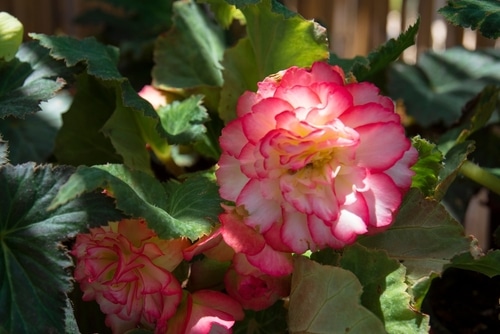
Can It Grow in Shade?
Most begonias do need some direct sunshine, but it is better to give them their sun in the morning and shade in the afternoon when temperatures are usually at their highest. Begonias often need nothing more than dappled sunshine to grow and thrive. There are, however, some cultivars that flourish in shade.
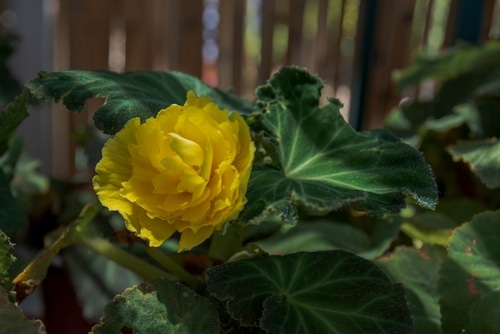
Can It Get Too Much Sun?
Excessive sun exposure can be detrimental to begonias. Most begonia cultivars will wilt or develop brown or yellow stains on their leaves if they receive too much sunlight. The plants will stop producing blossoms, lose their original hue, and, at worst, perish.
Unless you have a variety that can handle more than 6 hours of direct sun, you should make sure your begonias receive full sun in the mornings and filtered light in the afternoons. Provide sufficient amounts of water to keep your begonias healthy.
How to Measure How Much Sun an Area Is Getting
If you are not sure how much sunlight the different areas in your garden receive, you might use a garden light meter to measure the exact amount of sunlight each day.
If you don’t want to spend money on such a device, simply keep an eye on your garden for a few days in the summer. Choose the location, and each hour, note on a piece of paper whether or not it receives direct sunlight. To determine the average, do this for 7 days. Then calculate the sum of sunlight hours and divide the result by 7.